

How to Find the Right Property Agent: Master Guide
Choosing a property agent can shape your whole experience. The right person can save you time, explain the process clearly, and help you avoid costly mistakes. The wrong one can make things harder, slower, and more confusing.
This guide explains what to look for before you choose an agent. It covers the signs of a strong agent, the warning signs to watch, and the questions that matter before you agree to work together. It is written for buyers, renters, investors, and people who are moving to a new place and need proper support.
What a property agent really does?
A property agent helps people rent, buy, or sell property. Their job is not only to show listings or arrange viewings. A good agent also helps you understand the market, compare options, handle communication, and move through the process with fewer problems.
Some agents focus on one area or one type of client. Some work more with rentals. Others deal mostly with home sales, luxury units, new launches, or investment properties. This matters because not every agent fits every need.

A strong agent should know the local area well. They should understand pricing, common buyer concerns, paperwork steps, and the type of property you are looking for. They should also be able to explain things in a way that is easy to follow.
In many cases, people choose agents too fast. They may pick someone only because that person replied first, looked active online, or had many listings posted. That is not always enough. A busy profile does not always mean careful service. Before you choose, it helps to understand what the agent is actually expected to do for you.
Some agents focus on one area or one type of client. Some work more with rentals. Others deal mostly with home sales, luxury units, new launches, or investment properties. This matters because not every agent fits every need.
Why choosing the right property agent matters?
Choosing the best property agent often involves a lot of time, money, and trust. That is why the agent you choose can have a real effect on the outcome. Even when two agents work in the same city, the quality of support can be very different.
A good agent helps you stay clear from the start. They listen to what you need. They do not push you toward places that do not match your budget or goals. They help you focus on options that make sense for your situation.
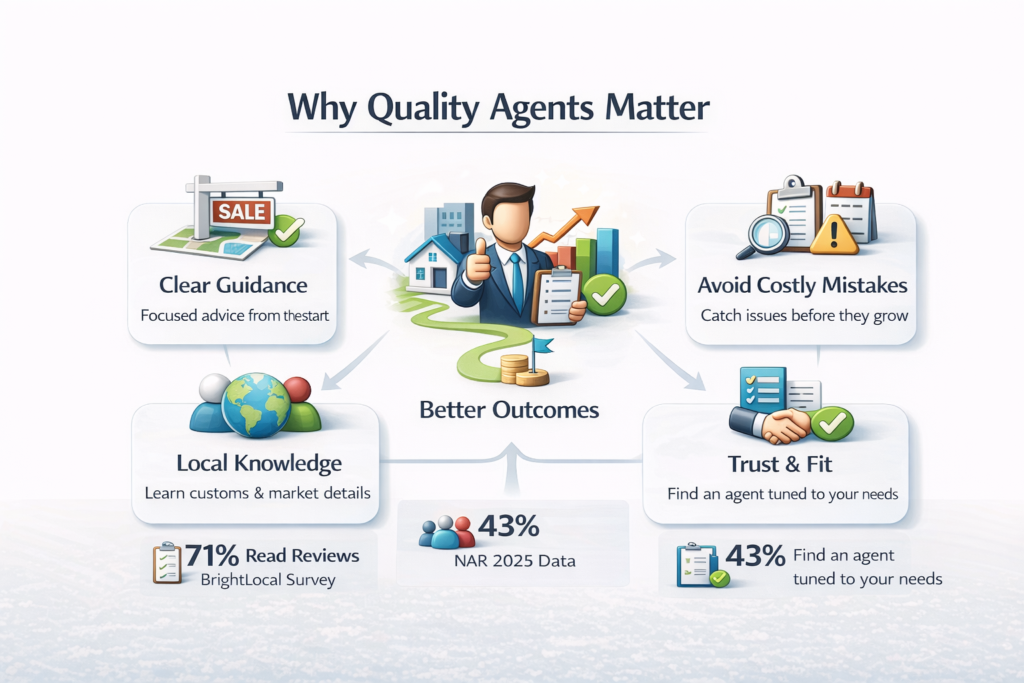
They can also help reduce small mistakes that later become bigger problems. This may include missed details in a listing, poor timing, unclear communication with owners, or confusion about steps and documents. When the process is handled well, you spend less energy fixing issues that could have been avoided.
This also matters for people who are new to an area. If you are moving to another city or another country, you may not know how the local market works. Prices, rental customs, paperwork, and negotiation styles can differ a lot from place to place. In that case, the agent is not only helping you find a property. They are also helping you move through an unfamiliar system.
Some people think any agent will do as long as they have access to listings. That can lead to weak choices. The better question is whether the agent can guide the process in a way that is clear, honest, and suitable for your needs.
When you should use a property agent?
Not every property search needs the same level of support. Some people already know the area well and are comfortable handling most steps independently. Others need more help because the move is more complex or the risks are higher.
You may benefit from a property agent if you are buying for the first time. A first-time buyer often has more questions and less confidence in judging price, location, paperwork, and negotiation. A patient agent can make the process easier to understand.
You may also need an agent if you are renting in a new city. Local knowledge can save time. An agent may know which areas fit your daily needs, which buildings are managed well, and which listings are priced too high for what they offer.
Foreign buyers and renters often need even more guidance. Rules, contracts, and standard practice may differ from what they know. In these cases, an agent who can explain each step clearly is often more valuable than an agent who simply has many listings.
Investors may also use agents, though for a different reason. They may want help comparing areas, checking demand, or finding property types that match their goals. In this case, a general agent may not be enough. It is often better to work with someone who understands that market segment well.
Even if you decide to use an agent, it is still important to choose carefully. Using an agent is not the same as being well represented.
Signs of a good property agent
A good property agent is usually clear, steady, and well-informed. They do not need to sound dramatic or overly polished. What matters more is whether they understand your needs and respond in a useful way.
That matters because most people still choose to work with an agent when the decision is serious. In NAR’s 2025 profile, 88% of some buyers used a real estate agent or broker to purchase their home. The same report says buyers want help not only finding a home, but also understanding the market and handling negotiations.
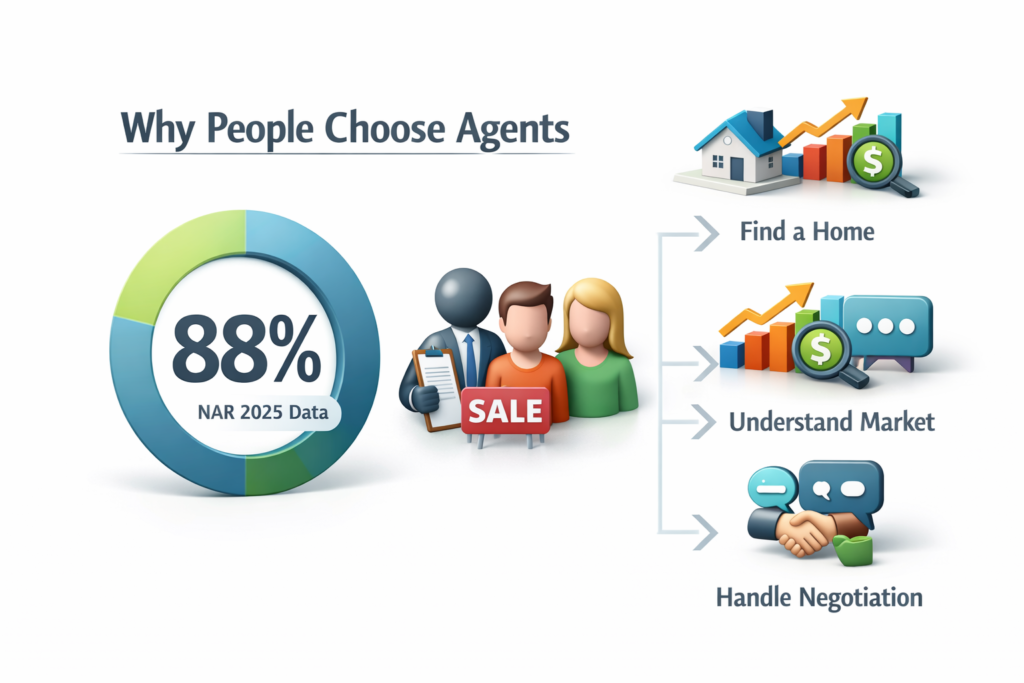
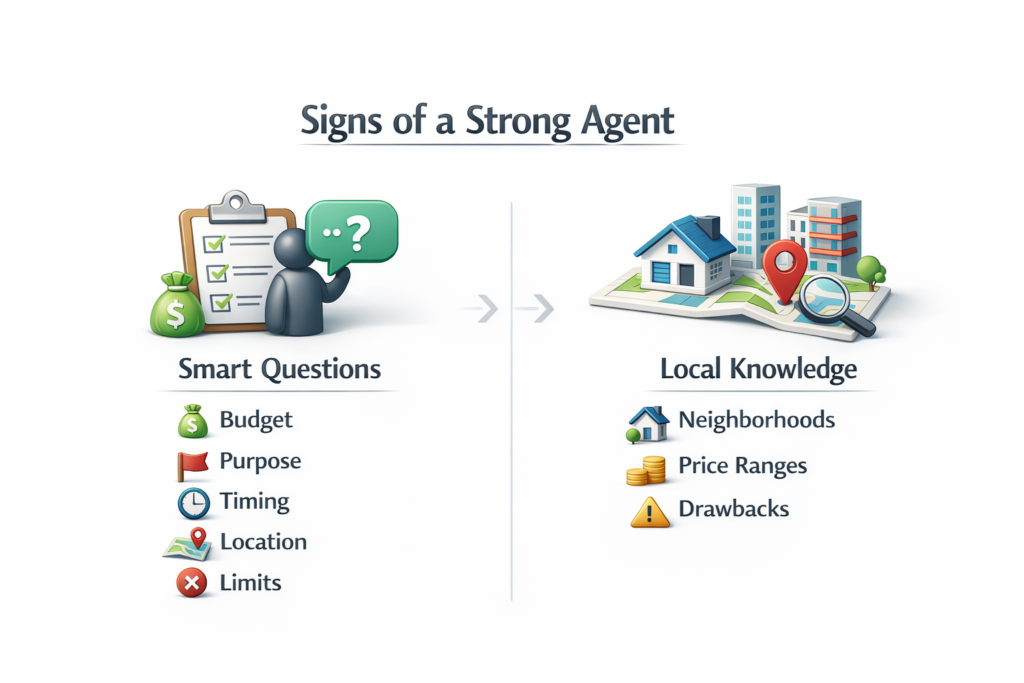
One strong sign is that they ask good questions early. They want to know your budget, purpose, timing, preferred area, and any limits that matter to you. This shows that they are trying to guide the search properly, not just send random options.
Another good sign is local knowledge. A strong agent should know the area beyond surface-level details. They should be able to explain why one part of a city may fit you better than another, what price ranges are normal, and what trade-offs come with certain buildings or neighborhoods.
Clear communication matters too. A good agent answers in a way that is easy to understand. They do not leave you guessing about next steps. They reply with enough detail to help you move forward. Zillow said in early 2025 that about 85% of buyers still use an agent, and its buyer research focused on the value people place on support, local knowledge, and help during the search process.
Honesty is also important. Good agents do not act as if every listing is perfect. They point out issues when needed. They explain limits. They tell you when something may not suit your goal. That kind of honesty can save you from poor decisions.
You should also notice how they handle pressure. A reliable agent does not rush you for no reason. They understand that property decisions take thought. They help you move forward, but they do not make you feel trapped into acting before you are ready.
Red flags to watch before choosing a property agent
Moreover, when it comes to property agent picks, there are some warning signs that show up early. It is better to notice them before you waste time or make the wrong choice.
| Red flag | What it may show |
|---|---|
| Ignores your budget or area | Poor listening |
| Gives vague answers | Weak clarity |
| Pushes you too fast | Too sales-driven |
| Says every listing is amazing | Overpromising |
| Knows little about the area | Weak local knowledge |
| Keeps fees or terms unclear | Poor transparency |
| Gets annoyed by questions | Hard to work with |
A good agent should help you think clearly. They should not rush you, confuse you, or avoid direct answers. If simple questions lead to weak replies, that is worth noticing.
One problem alone may not mean much. Still, when several signs appear together, it is often smarter to step back and keep looking.
Questions to ask before you choose a property agent
Before you agree to work with a real estate agent, ask a few direct questions. Their answers can show how clear, honest, and useful they really are.
What type of clients do you usually help?
How well do you know this area?
Have you worked with cases like mine before?
How do you guide clients through the process?
How often will you update me?
Are there any fees or agreements I should know about?
What problems are common in this market?
How do you help clients avoid bad choices?
Do not focus only on the answers. Notice how the agent explains things. A strong agent should reply clearly, stay calm, and make the process easier to understand. If the answers feel vague, rushed, or too polished, that may be a warning sign.
How to compare two or more property agents?
If you are speaking with more than one real estate agents, do not choose too fast. Give yourself time to compare how each person works. The goal is not to find the most impressive speaker. It is to find the person who understands your needs and can guide you well.
Start by looking at how clearly each agent communicates. One may answer faster, but another may explain things better. Speed helps, but clarity matters more when the process gets serious.
Next, look at local knowledge. A strong agent should be able to explain the area in a useful way. They should help you understand pricing, trade-offs, and what fits your situation best.
It also helps to notice how each agent handles your questions. A good agent should stay patient and direct. If one person avoids details or keeps pushing too hard, that should count against them.
In the end, choose the agent who gives you the most confidence through clear guidance, honest answers, and relevant knowledge.
Fees, terms, and agreements to clarify
Before you move forward, make sure you understand how the working relationship will function. Some problems begin not with the property itself, but with unclear terms between the client and the agent.
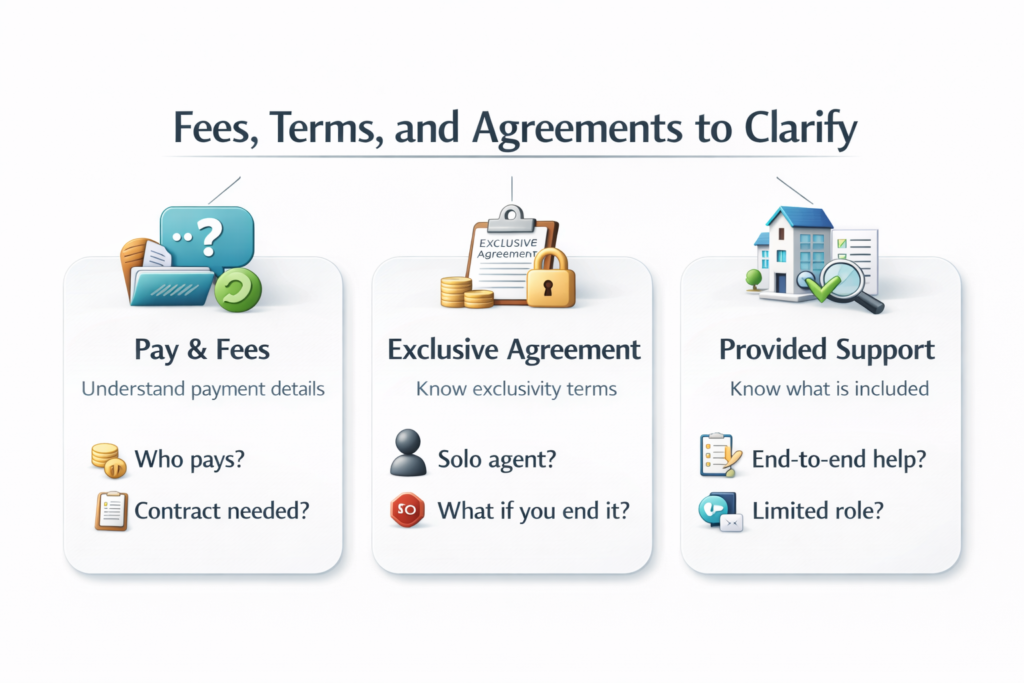
Ask how the agent is paid and whether you need to sign anything before they begin helping you. In some markets, the seller covers the fee. In others, the buyer or tenant may need to pay part of it. This should be explained early, not later.
You should also understand whether the agent expects exclusivity. Some agents ask clients to work only with them for a set period. That is not always wrong, but it should be clear from the start. You should know what you are agreeing to and what happens if you want to stop.
It also helps to ask what support is actually included. Some agents stay involved until the deal is complete. Others do much less. Clear terms protect both sides and make the process easier to trust.
Should you choose an independent agent or a large agency?
Choosing between an independent and a large real estate property agent depends on the kind of help you need. A large agency may offer wider coverage, more listings, and stronger brand visibility. That can be useful if you want more options or if the market moves quickly.
| Type | What it often offers |
|---|---|
| Large agency | Broader reach, bigger team, more listings |
| Independent agent | More direct contact, focused support, personal service |
An independent agent may give you a more personal experience. Communication is often more direct, and the process may feel easier if you prefer one main contact from start to finish. This can be helpful when your needs are specific or when you want closer guidance.
Still, size does not decide quality. A large agency can still give weak support if the assigned agent does not understand your goals. An independent agent can also fall short if they are slow, unclear, or poorly organized.
The better choice is the one that fits your situation. Look at how the agent communicates, how well they know the area, and whether they explain things clearly. Those details usually matter more than the company size itself.
How to check if a property agent is trustworthy?
A property agent’s trustworthiness should not come only from a polished profile or active social media page. It should come from proof, clarity, and the way the agent handles real questions.
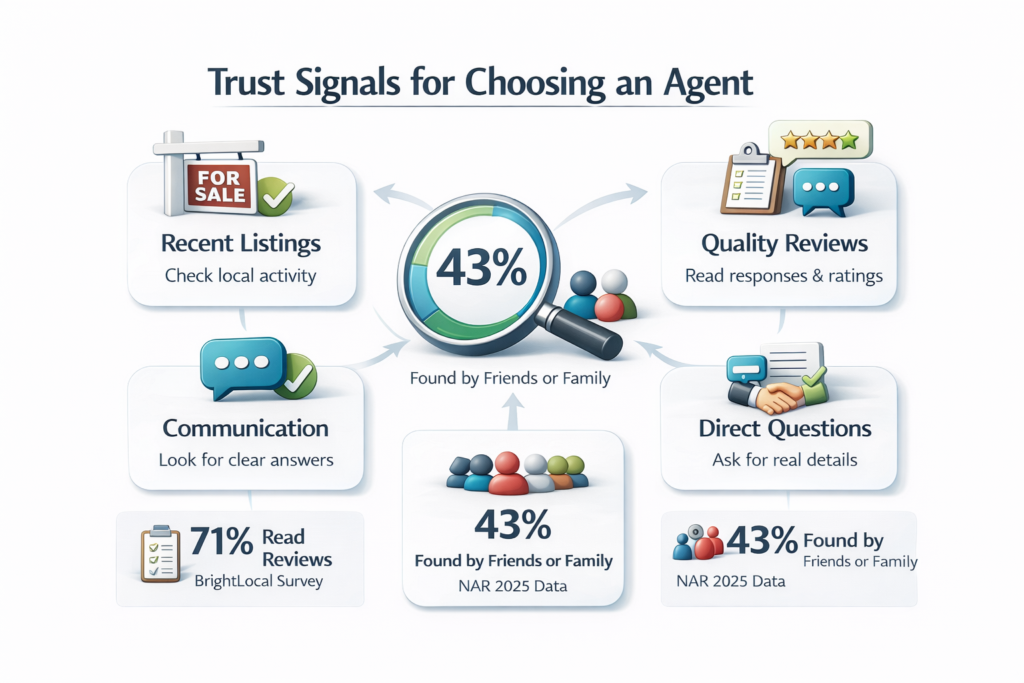
That matters because many people still choose agents through trust-based signals. In NAR’s 2025 data, 43% of buyers found their agent through a friend, neighbor, or relative. That shows how strongly reputation still shapes this decision.
Start by checking the agent’s recent listings, reviews, and local activity. See whether they work in the areas you care about and whether their communication looks steady and clear. Review quality matters too. BrightLocal’s 2025 survey found that 71% of consumers regularly read online reviews for local businesses, and 89% expect businesses to respond to reviews. A profile with thoughtful replies can tell you more than a high rating alone.
It also helps to ask direct questions. A trustworthy agent should explain things calmly, give clear answers, and stay open when you ask for detail. Good fit builds trust faster than image alone.
Choosing a property agent as a foreign buyer or renter
Choosing the correct real estate agent becomes more important when you are entering a market you do not know well. Local rules, documents, payment habits, and negotiation style may be very different from what you are used to.
In this case, a good agent should do more than send listings. They should help you understand how the process works in that country. They should explain timing, documents, common risks, and practical details that are easy to miss from abroad.
Language also matters. If the process includes contracts, building rules, or local communication, it helps to work with someone who can explain things clearly in a language you understand well.
You should also pay attention to patience and accuracy. A foreign buyer or renter often needs more context, not more pressure. An agent who can guide you step by step is usually far more useful than one who simply moves fast.
How property agent standards differ by country?
Property agents do not work in the same way in every market. Rules, fees, licensing, buyer habits, and negotiation styles can differ. That is why the main guide helps with the basics, while local guides explain what changes in each country.
Thailand
Thailand has many condo-focused markets, so choosing the right agent means looking beyond the listing itself. A good agent should be able to explain building rules, fees, owner communication, and the practical details that can affect the rental or buying process. This matters even more in busy property areas where listings move fast, and service quality can vary. If you want a more local view of what to check, see our guide on choosing a real estate agent in Thailand.
Singapore
Singapore has a more structured property system, so choosing the right agent means checking more than how quickly they reply or how many listings they share. A good agent should be able to explain registration, agency representation, fees, viewing steps, and the documents involved before you commit. This becomes especially important in a market where rules are clearer, but pressure, fake listings, or unclear communication can still create problems. If you want a more local view of what to check, see our guide on choosing a property agent in Singapore.
United States
The United States has a more fragmented property system, so choosing the right agent means paying attention to state-level differences, not just the agent’s personality or listings. A good agent should be able to explain licensing, agency relationships, written buyer agreements, fees, disclosures, and how the process may change depending on the state. This matters because rules on representation, compensation, and disclosures do not work exactly the same everywhere in the U.S., even though federal fair housing protections still apply. If you want a more local view of what to check, see our guide on choosing a real estate agent in the United States.
Malaysia
In Malaysia, licensing and registration matter more visibly because buyers often check whether an agent is properly authorized. It also helps to understand how agents handle new developments, subsale properties, and cross-border buyer questions. Read our full guide to choosing a property agent in Malaysia.
South Korea
South Korea has market practices and housing systems that can feel unfamiliar, especially for foreign buyers or renters. A good agent should be able to explain local terms clearly, guide you through the process step by step, and help you understand how things work in real life, not only on paper. This matters because even small misunderstandings can create stress when the market language, contract structure, or rental system is new to you. If you want a more local view of what to check, see our selection guide on choosing a property agent in South Korea.
Philippines
In the Philippines, choosing the right agent means looking beyond the listing itself. A good agent should help you understand whether the broker is properly licensed, whether the property is backed by clear authority to lease, and what payment terms should be checked before anything moves forward. This matters even more in condo rentals, where reservation fees, deposits, broker commission, and monthly costs can create confusion if they are not explained clearly. For a closer look at what to verify, see our guide on how to verify a real estate agent in the Philippines.
India
In India, trusting a broker should begin with checks, not assumptions. A good agent should help you understand how the process works in that city, what payment pressure to watch for, and which property details should be reviewed before you move forward. This matters because brokerage, token money, document checks, and rental terms can vary a lot from one market to another. For a closer look at what to verify first, see our guide on what to check before trusting a real estate agent in India.
Choose your property agent responsibly
Choosing a property agent should be done with care. This is not only about finding someone active in the market. It is about finding someone who listens well, explains clearly, knows the area, and helps you move forward with fewer risks.
A good agent can make the process easier to understand. A weak one can make it more stressful than it needs to be. That is why it helps to compare carefully, ask direct questions, and notice how the person works from the start.
Once you understand the basics, it becomes much easier to choose well. From there, you can look at the country-specific guides, where the rules, expectations, and local market differences become more detailed.
Choosing property agency FAQ
How do I know if a property agent is good?
A good property agent listens well, explains things clearly, knows the local area, and does not rush you without reason. Their value is not only in showing listings, but in helping you make better decisions.
Should I speak with more than one property agent?
Yes, in many cases that helps. Speaking with more than one agent makes it easier to compare communication style, local knowledge, and how well each person understands your needs.
What questions should I ask a property agent first?
You should ask about their experience, the areas they know, the type of clients they usually help, how they handle the process, and whether there are any fees or agreements involved.
Can I trust online reviews when choosing a property agent?
Reviews can help, but they should not be your only filter. It is better to read them together with the agent’s listings, local activity, and the way they answer your questions directly.
Is it better to choose a local property agent?
In many cases, yes. A local agent often understands pricing, neighborhood differences, and market habits better. That knowledge can help you avoid weak choices.
Should foreign buyers use a property agent?
In most cases, yes. Foreign buyers often face unfamiliar rules, paperwork, and local practices. A good agent can explain the process more clearly and help reduce avoidable mistakes.
Do all property agents charge the same way?
No, fee structures can differ by country, market, and type of deal. That is why it is important to ask early how the agent is paid and what support is included.
Can I stop working with an agent if it is not a good fit?
That depends on whether you signed any agreement. Before you start, ask if there is exclusivity, how long it lasts, and what happens if you want to stop.
How can Go Condo Atlas help me choose a property agent?
Go Condo Atlas helps you compare important information in one place. You can explore locations, review property-related details, and use market context to understand what kind of agent may fit your needs better. This can make it easier to ask better questions and choose with more confidence.
Why should I use Go Condo Atlas when choosing a property agent?
Go Condo Atlas gives you a clearer starting point before you choose an agent. The platform helps you explore locations, understand property context, and review useful details that can support smarter decisions. This can save time and help you approach agents with better questions and clearer goals.