

Why Choosing the Right Property Agent Matters in Singapore?
This guide explains how to choose a property agent in Singapore with more care. It covers what a good agent should do, how to check if the person is properly registered, what warning signs to notice early, and which fees or terms you should clarify before moving ahead.
It also looks at rental scams, weak listings, and why trust should come from proof, not image alone. If you are renting, buying, or moving from abroad, this article will help you ask better questions, avoid common mistakes, and make clearer decisions before you commit to an agent or property.
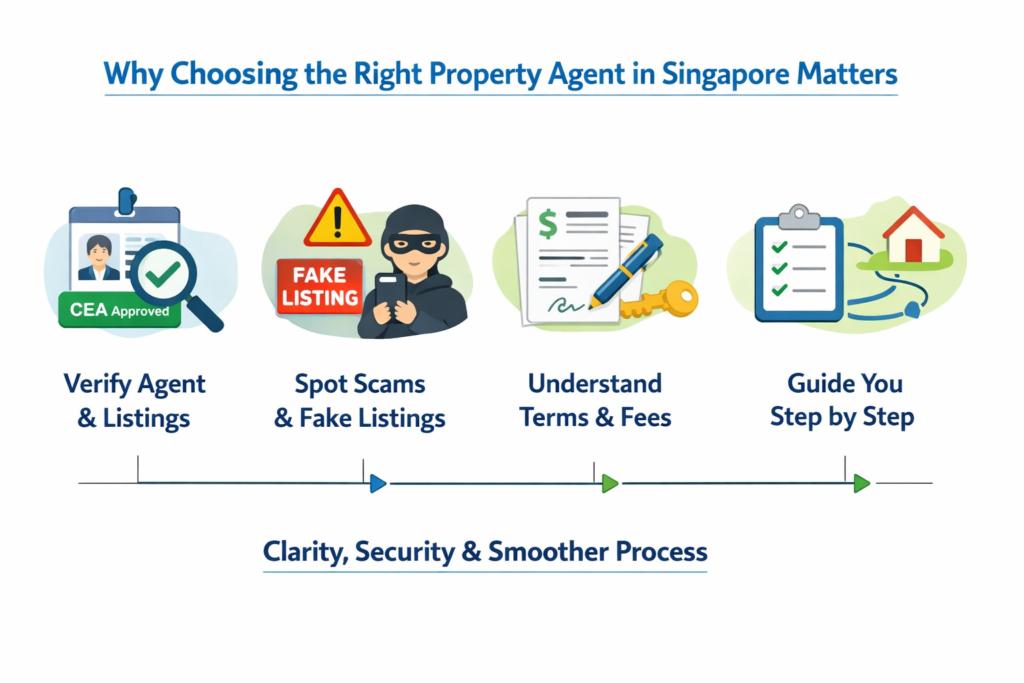
Why choosing the right property agent in Singapore matters?
Choosing the right property agent in Singapore can shape much more than the property search. It can affect how clearly you understand the listing, the landlord or seller, the fees, the documents, and the next steps. This matters because the market can move fast, while mistakes often begin with weak advice, unclear terms, or poor checks.
In Singapore, both renters and buyers should verify that an agent is properly registered, check whether the listing is real, and stay careful around fake listings, impersonation, and pressure to pay too early. A strong agent should do more than send options or arrange viewings.
They should help you move through the process with clarity, structure, and fewer avoidable problems. This becomes even more important if you are new to Singapore or searching from abroad. Next, it helps to look at what a good property agent in Singapore should actually do from the start.
Why choosing the right property agent in Singapore matters?
A good property agent in Singapore should help you do more than browse listings. The role should begin with clear questions about your budget, timeline, preferred area, housing type, and any limits that matter to you. That matters because a serious search should be filtered early, not widened with random options that waste time.
Also, a strong agent should also know the local market well enough to explain price levels, common rental or buying conditions, and practical differences between one area and another. In Singapore, that also includes helping you move through a process that often depends on clear paperwork, proper checks, and verified representation.
| What they do well | Why it matters |
|---|---|
| Ask clear early questions | Helps narrow the search properly |
| Explain local market conditions | Makes pricing and trade-offs easier to judge |
| Verify facts and process | Reduces confusion and avoidable mistakes |
| Communicate clearly | Builds trust before money is involved |
A weak agent often focuses only on speed, replies, or volume. A better one adds structure and judgment. They should help you understand what fits, what does not, and what needs closer checking before you move forward. The next section looks at how to verify a property agent in Singapore before you trust the process.
Verifying a property agent in Singapore
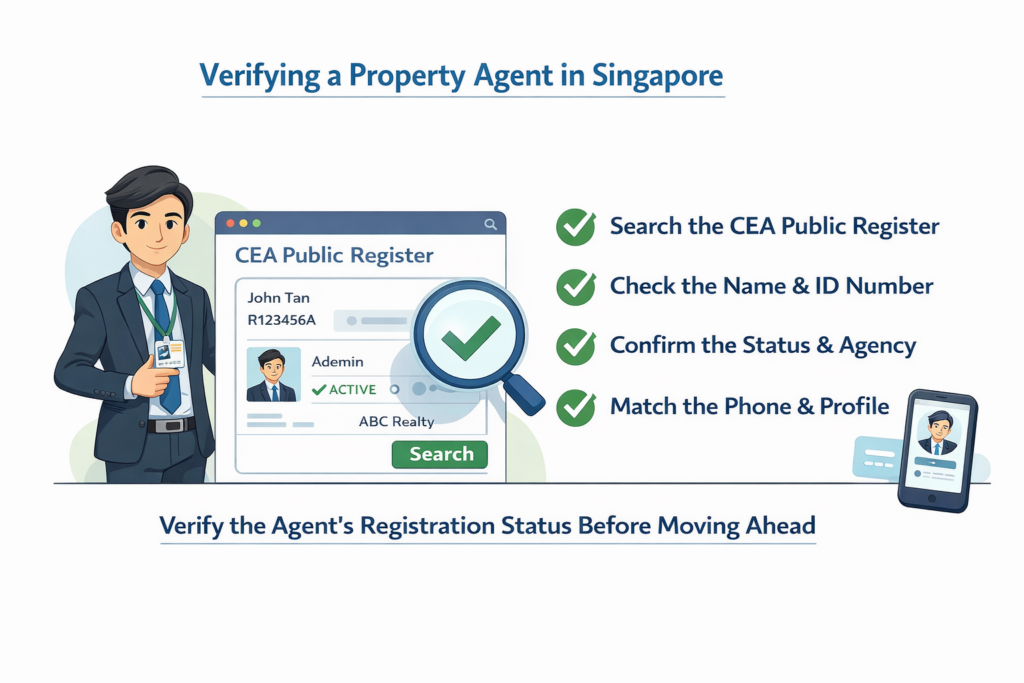
Before you trust an agent in Singapore, you should check whether the person is properly registered and whether their details match what you see in the listing or message. This matters because fake listings and agent impersonation are still real concerns, especially when someone asks for money too early or avoids clear checks. A profile photo, polished page, or quick reply is not enough on its own. You need proof that the person is active in the market and allowed to act as an agent.
The best starting point is the CEA Public Register. There, you can check the agent’s name, registration status, and other basic details. It also helps to compare that information with the phone number, agency name, and profile you were given. If details do not match, that should raise concern immediately. You should also be careful if the person avoids direct answers, rushes you toward a deposit, or does not explain the process clearly. The next part looks at the most common warning signs people should notice before moving ahead with a property agent in Singapore.
Warning signs of a weak real estate agent
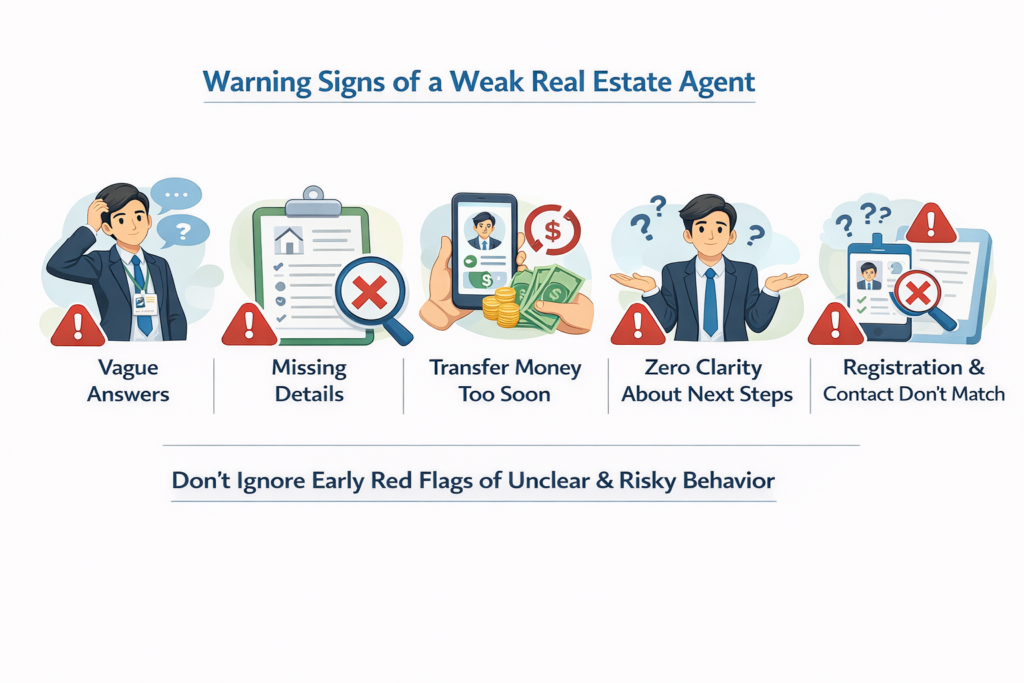
Some warning signs can appear very early, even before the search becomes serious. It is better to notice them at the start than deal with larger problems later. In Singapore, this matters because fake listings, impersonation, and pressure for early payment are still real concerns. A weak agent may sound helpful at first, yet their actions often show a different pattern once money, documents, or property details enter the conversation.
Common red flags include vague answers about the unit, missing details about fees, pressure to transfer money before proper checks, and a poor explanation of what happens next. You should also be careful if the person avoids sharing a valid registration number, gives contact details that do not match, or pushes you forward without helping you verify the listing or process.
Fast replies alone do not prove professionalism. Clarity matters more than speed. A strong agent should help you move with confidence, not confusion. The next section explains which fees, terms, and working arrangements you should clarify before agreeing to anything.
Fees and terms to clarify with a real estate agent in Singapore
Before you move forward with a real estate agent, make sure the working terms are clear from the start. This part matters because confusion often begins when people assume the process is simple, then notice important details only later.
A professional agent should explain how the arrangement works, what support is included, and what financial or legal points need to be understood before anything moves ahead. In Singapore, that clarity matters even more because agent engagement, representation, and tenancy-related obligations should not be left vague.
Fee structure, deposits, and payment responsibility
Before anything progresses, ask who pays the agent fee, what that fee covers, and whether any other charges may appear during the process. If you are renting, ask what the deposit is for, when it becomes payable, and what should happen before any money is transferred. These questions matter because confusion often starts when people assume the financial side is simple, then discover missing details later.
It also helps to check whether the tenancy agreement states who is responsible for stamp duty, since IRAS says this should be determined by the terms of the agreement. CEA’s consumer guidance is also useful here because its prescribed estate agency agreements are meant to clarify the scope of work and commission terms before the relationship moves further.
Scope of support, exclusivity, and representation rules
You should also clarify how the agent will work with you from start to finish. Ask whether the agent expects exclusivity, what support is included, and at what stage that support ends. Some agents stay involved until signing. Others step back much earlier. It is better to understand this before the search becomes serious.
In Singapore, this part also links to representation rules. Gov.sg states that an agent cannot represent and collect commission from both sides in the same transaction, because dual representation is an offence. That makes it important to ask clearly who the agent is acting for and what their role is in the deal. A professional property agent in Singapore should be able to explain the process, the limits of their role, and the next steps in a way that is easy to follow.
What trust should be based on when choosing a property agent in Singapore?
Trust should not come only from a polished profile, active social media page, or fast reply. It should come from proof, clarity, and the way the agent handles real questions. In Singapore, that matters even more because agent identity can be checked through the CEA Public Register, which gives buyers and renters a more reliable way to verify who they are dealing with before moving ahead. At the same time, official scam guidance keeps warning people not to rely only on attractive listings or quick payment requests.
A stronger trust check usually includes:
verified registration details that match the profile, name, and contact information
clear answers about the property, process, fees, and next steps
recent activity that shows real market presence, not only recycled listings
calm communication when you ask direct questions or request proof
no pressure to transfer money before proper checks are completed
Good fit matters too. A trustworthy property agent in Singapore should make the process clearer, not heavier or more confusing. The next section looks at what a tenancy agreement in Singapore should clearly include before any payment is made.
What a tenancy agreement in Singapore should clearly include?
A tenancy agreement in Singapore should be clear before any payment is made. It should show the main terms in a way that is easy to read and verify. This includes the names of the landlord and tenant, the property address, monthly rent, deposit amount, lease length, payment dates, and notice period.
It must also explain what happens if the agreement ends early, if damage appears, or if one side does not follow the terms. For daily living, the agreement should make clear how utilities are handled, whether the internet is included, what furniture or appliances come with the unit, and when the deposit should be returned.
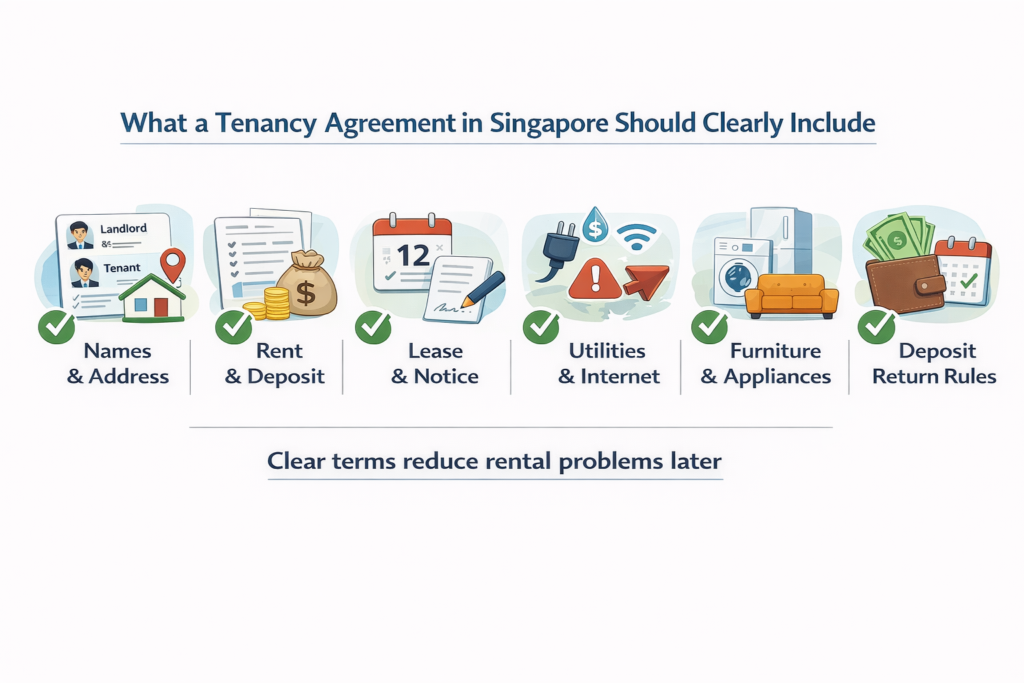
These details matter because small gaps often turn into bigger problems later. A proper agreement is not just paperwork. It helps show whether the rental process is being handled carefully from the start. Next, it helps to look at the final warning signs people should notice before committing.
Final warning signs before you commit
Even if the listing looks good, the last stage before commitment still matters. Some problems only become visible when you ask for the contract, payment steps, or proof behind the listing. In Singapore, that is where weak agents often become easier to spot. A person may reply quickly, yet still avoid clear answers, delay verification, or push for money before the process is properly explained. Those signs should not be ignored.
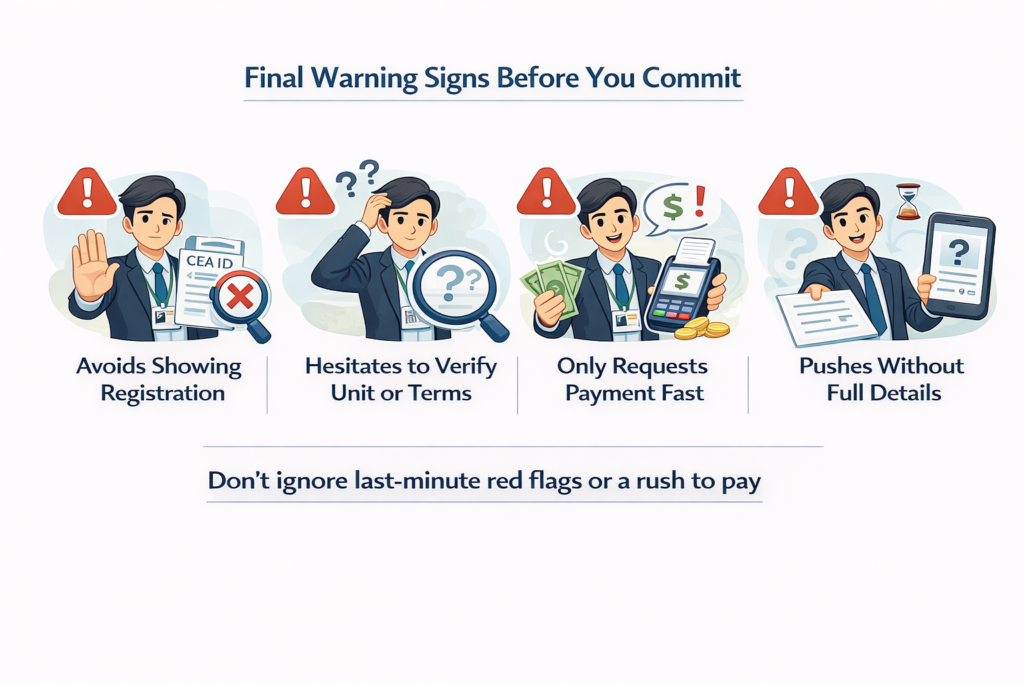
A reliable property agent in Singapore should be open about registration, documents, fees, and next steps before asking you to move forward. If the process starts feeling rushed, unclear, or inconsistent, it is better to pause and check everything again.
The final section explains how a stronger platform can help you compare agents in Singapore with more confidence before first contact.
Quick index for checking a property agent in Singapore
Before you choose a property agent in Singapore, it helps to review the process in one clear place. A simple index like this can help you compare agents more carefully and notice weak points before the search moves into viewings, payments, or contract discussions. This matters because in Singapore, agent verification, clear representation, and careful handling of payment steps all play a direct role in reducing avoidable risk.
A polished profile alone is not enough. You need a way to judge whether the person is properly registered, explains the process clearly, and handles questions in a professional way.
| Check point | What to review | Why it matters | Good sign | Warning sign |
|---|---|---|---|---|
| Registration | CEA Public Register, name, agency | Confirms the agent can legally operate | Details match exactly | Missing or unclear details |
| Listing quality | Address, photos, pricing, unit facts | Helps spot weak or misleading listings | Specific and consistent information | Vague or recycled listing |
| Communication | Replies about process, fees, steps | Shows how the agent handles real questions | Clear, calm, direct answers | Pressure or unclear replies |
| Payment process | Deposit timing, purpose, conditions | Reduces early transfer risk | Payment comes after proper checks | Push for money too early |
| Role clarity | Who the agent represents | Prevents confusion later | Role explained from the start | Avoids giving a clear answer |
| Agreement readiness | Contract terms and next steps | Helps you prepare before commitment | Documents explained early | Terms appear only at the end |
Use this index as a first filter, not the final answer. A strong property agent in Singapore should score well across these points, not only on image or speed. The next step is to bring these checks together and make the final choice with more confidence.
How to check a property agent in Singapore beyond the CEA register?
A stronger platform helps you do more than find a name. It helps you check whether the agent has enough visible proof around them before you make contact. In Singapore, the first step is still to confirm that the agent is properly registered through the CEA Public Register. After that, the more useful step is to look wider and compare the public trust signals around that person.
That means checking things like:
whether the agent has a Google Business Profile and real review activity
whether they appear in trusted directories or property platforms
whether their business hours, contact details, and service areas look consistent
whether reviews sound specific, recent, and connected to real experiences
whether the agent appears verified on Go Condo Atlas and how complete that profile is
whether their profile shows enough depth to judge fit before you reach out
This matters because people do not choose only on legal status. They also choose on visible trust, outside proof, and signs that other people have already dealt with that agent in a real way. A stronger platform makes that process easier by pulling more of those trust signals into one place, so users can compare agents with more context before moving into viewings, negotiations, or payments.
Conclusion
Choosing a property agent in Singapore is not only about finding someone with access to listings. It is about choosing a person who can guide the process with clarity, proof, and steady judgment. A better choice usually comes from looking at more than one layer. First, verify that the agent is properly registered. Then look at the wider trust signals around them, such as reviews, platform presence, profile quality, and how clearly they answer real questions. That matters because weak choices often begin with rushed decisions, vague communication, or trust based only on image.
A strong agent should help you understand the market, the process, the terms, and the risks before anything moves too far. In the next part, it helps to answer the most common questions people still have before choosing a property agent in Singapore.
Frequently asked questions about choosing a property agent in Singapore
How do I verify a property agent in Singapore?
Start with the CEA Public Register. Check the agent’s name, registration status, and agency details, then compare them with the profile, phone number, and listing information you were given.
Should I pay a deposit before signing anything?
Be careful with early payment requests. Before transferring money, make sure the listing is real, the agent is verified, and the process, purpose, and supporting documents are clearly explained.
What should I ask a property agent before working with them?
Ask about fees, who they represent, areas they cover, property type focus, support scope, and next steps. Their answers should be clear, direct, and easy to verify.
What should a tenancy agreement in Singapore include?
It should include names, property address, rent, deposit, lease term, payment dates, notice period, and important rules on termination, damage, utilities, and deposit return.
Can I trust reviews and online profiles alone?
No. Reviews and profiles help, but they should support, not replace, verification. Use them together with the CEA register, matching contact details, and clear answers to direct questions.
How can Go Condo Atlas help me choose a property agent in Singapore?
Go Condo Atlas helps you compare agents in one place, review visible trust signals, check profile quality, and start with better questions before contacting anyone.