

What to Check Before Trusting a Real Estate Broker in India?
Trusting a real estate broker in India should never begin with the listing alone. In this market, people often move too quickly from interest to commitment, especially when the broker sounds confident, the property looks attractive, or token money enters the conversation early.
That is why this guide focuses on what should be checked before trust is given. It looks at the points that can shape the process most, including registration, payment pressure, brokerage clarity, and document-related risks. When these checks happen first, buyers and renters can approach the next step with more caution and far better judgment overall.
Why trust should come after checks, not before?
In India, trust should come after checks because the first impression can be misleading. A broker may sound informed, the property may look convincing, and the deal may seem easy to move forward with. Still, none of that proves the person is properly registered, the payment process is safe, or the documents behind the property are in order.
This is where many people make weak decisions. They focus on the opportunity first and the verification later. By that point, money, pressure, or urgency may already be shaping the process. That is why the safer approach is to slow down and check the basics before commitment begins. Once that mindset is clear, the next thing to understand is how to check whether a real estate agent in India is RERA-registered.
How to check whether a real estate broker in India is RERA-registered?
A real estate broker in India should be RERA-registered when the law requires it, which is why this is one of the first things worth checking before trust begins. In practice, this means looking beyond the broker’s words, profile, or listing and checking whether their details appear in the relevant state RERA system. India does not work through one simple national live agent search for every case.
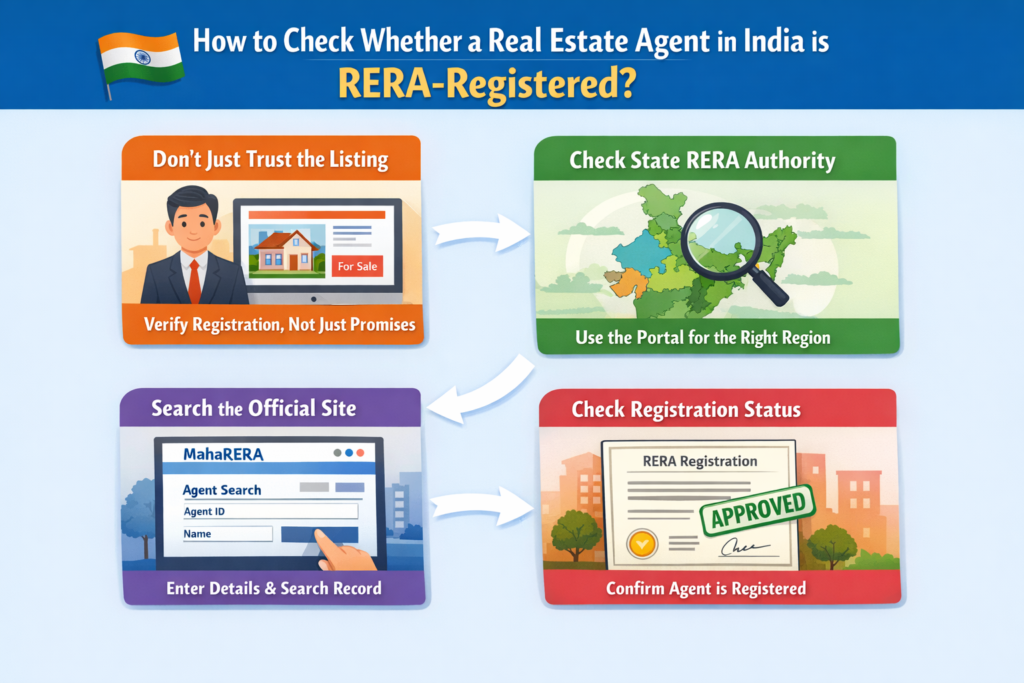
Instead, buyers and renters often need to verify the agent through the state-level RERA authority linked to the property market they are dealing with. Official portals such as MahaRERA provide public agent-search functions, which make this check both practical and important.
Once the registration side is clearer, the next point becomes more sensitive: why token money in India can create risk before the deal is truly secure.
Why token money in India should be checked carefully before trust moves further?
Token money in India should be checked carefully before trust moves further, because this is often the point where urgency starts to replace proper review. A broker may say the amount is needed to block the property or show serious intent. Even so, the safer question is not only how much is being asked, but what that payment actually secures.
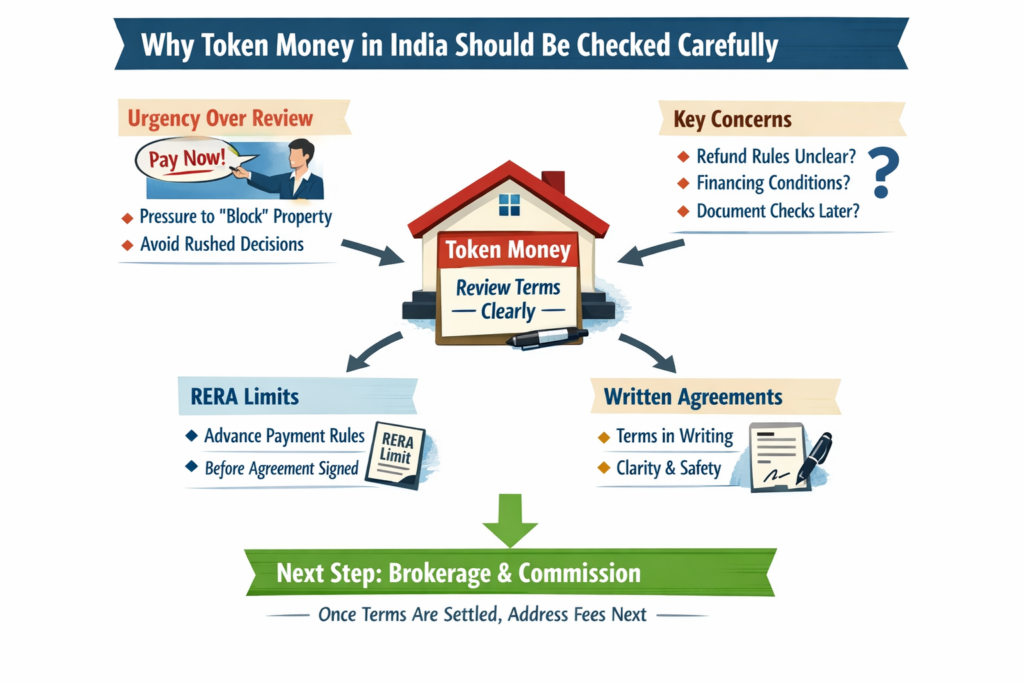
That caution is not theoretical. In recent Indian property discussions, buyers still describe token money as the stage where confusion begins, especially when refund terms, financing conditions, or later document checks are not written clearly from the start. Recent rule-based guidance also notes that advance payment limits under RERA matter before a registered agreement is in place.
Before paying, the terms should be written down calmly and reviewed in full. Once that part is clear, the next issue becomes brokerage and commission.
What brokerage and commission in India should be clarified before trust grows further?
Brokerage and commission in India should be clarified before trust grows further, because this is where many deals start to feel less transparent than they first seemed. A property may look promising, the broker may sound confident, and the discussion may move quickly.
Even so, that does not mean the financial side is already clear. Recent India property discussions still show people asking what percentage is normal, who is expected to pay, and whether the fee was disclosed honestly from the start. Current housing guides also say broker commission in India commonly falls around 1% to 3% of the transaction value for sales, while rental brokerage often sits around one month’s rent, though this can vary by city and deal structure.
| What to clarify early | Why it matters in practice |
|---|---|
| Who pays the commission | Prevents later arguments or hidden assumptions |
| How the amount is calculated | Shows whether it is a flat fee, percentage, or city-based norm |
| When it becomes payable | Helps avoid pressure before checks are complete |
| What service it covers | Makes it easier to judge whether the fee is reasonable |
This is why brokerage should never stay verbal. Once the fee side is clear, the next thing to examine is which property documents should be checked before the deal feels safe enough to trust.
What property documents in India should be checked before the deal feels safe?
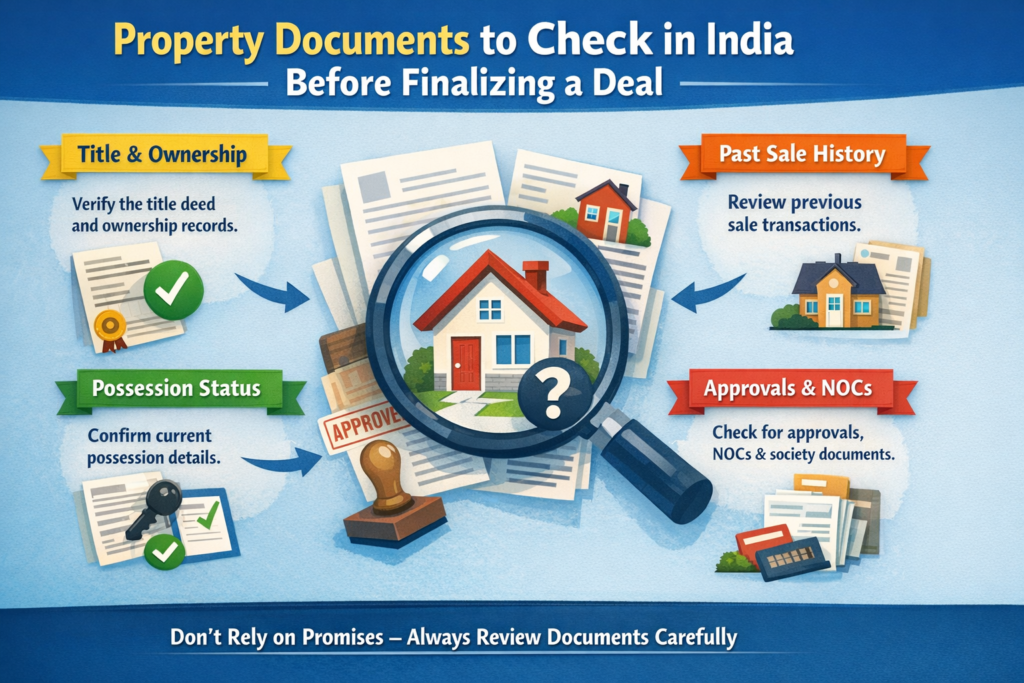
Property documents in India should be checked before the deal feels safe because a broker’s confidence is not the same as legal clarity. This is the stage where buyers and renters need to slow down and look at what stands behind the property, not only at what is being promised in conversation. We also warn others not to rely only on broker reassurance and to get proper document review done before moving ahead with payment or commitment.
At a practical level, the key checks usually include title-related records, the sale history, possession status, and any approvals or society-related documents that affect transfer or occupancy. The exact document set can vary by city and property type. That is why the next useful step is to look at what renters in India should check before signing.
What renters in India should check before signing?
Renters in India should check more than the rent amount before signing. At this stage, the main question is not whether the unit looks acceptable, but whether the terms around it are clear enough to trust. In many Indian cities, confusion begins when renters move too fast from interest to commitment without slowing down to review the details that shape the actual stay.
A few checks matter more than they first appear:
whether the rent agreement reflects the exact terms discussed
whether the deposit amount and return conditions are written clearly
whether maintenance charges are included or separate
whether notice period, lock-in period, and early exit terms are fully explained
This step deserves attention because often people run into disputes over deposits, brokerage, agreement terms, and extra charges that were not understood properly at the start.
Once the rental-side checks are clear, the final practical question becomes how Go Condo Atlas helps users compare real estate agents in India more confidently.
What foreigners in India should know before trusting the rental process?
Foreigners in India should know that renting often becomes more demanding at the paperwork stage, not at the listing stage. A unit may look suitable, and the broker may sound confident, yet the real issue is whether the process is clear enough for someone who may not have local documents, city knowledge, or a long rental history in India. That’s why foreigners are often asked for stronger identity proof, visa-related documents, and more detailed rental paperwork than local tenants expect.
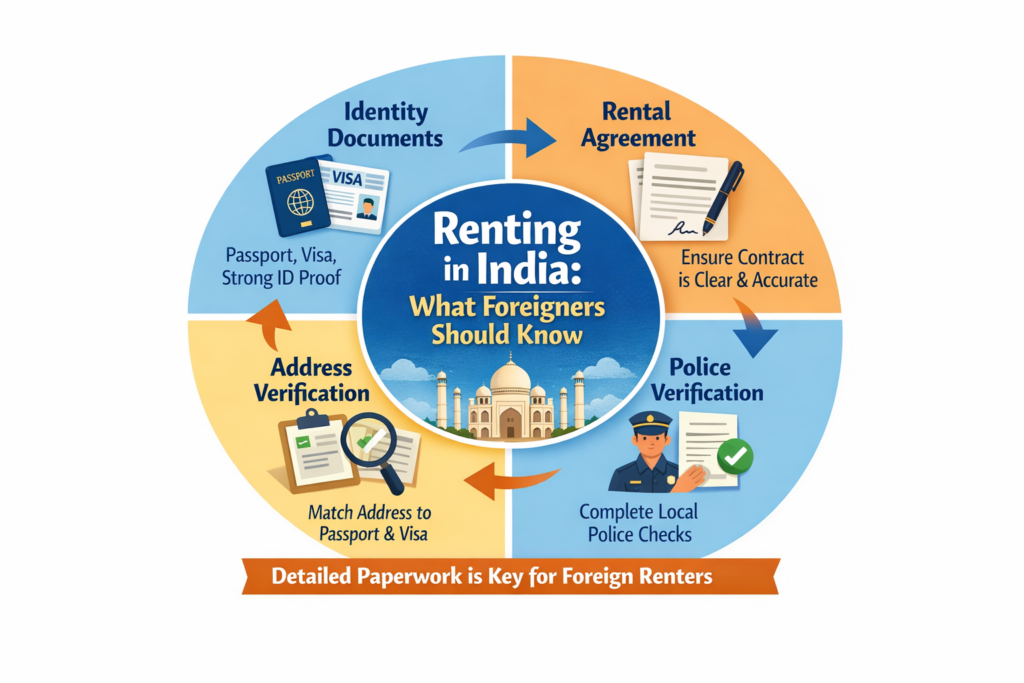
This is where clarity matters most. In practice, foreigners should pay close attention to whether the rent agreement is written properly, whether the address and tenant details match passport and visa documents, and whether any city-specific compliance step, such as tenant police verification, still needs to be completed. Plus, renters should also note that foreigners may need a valid rent agreement for visa or police-verification purposes, while police-verification explainers in 2026 still describe it as an active part of the process in many places.
How Go Condo Atlas helps users compare real estate agents in India?
Go Condo Atlas helps users start from a clearer position before they trust a broker, discuss token money, or move toward signing. In India, that matters because many property searches begin through scattered listings, informal broker networks, and mixed-quality profiles that do not always give enough proof on their own. A more structured starting point can make the early stage easier to manage.
Instead of relying only on what a broker says in conversation, users can compare real estate agents in India with more focus and better context. That helps people look at the checks that matter most, such as RERA-related verification, brokerage clarity, payment pressure, and deal transparency. With a stronger base at the start, it becomes easier to approach the final decision with more confidence and fewer blind spots.
The takeaway
Trusting a real estate agent in India should not begin with confidence, speed, or a persuasive listing. It should begin with checks.
In this market, the safer path is to verify registration, slow down before token money is paid, clarify brokerage early, and look at the property documents before the deal starts to feel emotionally settled. These steps do not make the process harder. They make it more grounded.
Frequently asked questions about trusting a real estate agent in India
How do I know if a real estate agent in India is trustworthy?
Start by checking whether the agent is properly registered where required, whether their details match a real office or firm, and whether they explain payments and documents clearly. Trust should come after verification, not before.
Why is token money risky in India?
Token money becomes risky when it is paid before the terms are written clearly. The main issue is not only the amount, but whether the payment secures anything meaningful and what happens if the deal does not move forward.
What should I clarify about brokerage in India?
You should clarify who pays the brokerage, how it is calculated, when it becomes payable, and what service it covers. If that stays vague, the deal can become more confusing later.
What documents should be checked before trusting the property deal?
The important checks usually include title-related documents, sale history, possession status, and any approvals or society-related papers that affect use, transfer, or occupancy. The exact set can differ by property type and city.
What should renters in India pay close attention to before signing?
Renters should look carefully at the rent agreement, deposit terms, maintenance charges, notice period, lock-in clause, and early exit conditions. These details often affect the real experience more than the listing first suggests.
How can Go Condo Atlas help me compare real estate agents in India?
Go Condo Atlas helps users compare real estate agents in India in a more structured way before trust, payment, or signing. That can make it easier to review important details and begin the process with more clarity.