

United States Real Estate Broker Guide for Renters and Buyers
A United States real estate broker can play a very different role depending on whether you are renting or buying, which state you are in, and how the process is handled from the start. That is why this guide does not treat every situation the same.
In the United States, renters often worry about fake listings, application fees, and weak communication, while buyers may need to think more carefully about representation, agreements, and how an agent supports the deal. This guide explains the issues that matter most, so renters and buyers can move forward with more clarity and fewer avoidable mistakes.
What renters in the United States need to watch first?
A United States real estate broker can help renters avoid problems that often begin before a lease is even signed. In the U.S., many rental searches now start online, which makes fake listings, copied photos, and rushed payment requests more common concerns than many people expect. The Federal Trade Commission says rental scammers often copy real listings, replace the contact details, and then ask for an application fee, deposit, or first month’s rent before the renter has properly verified the property.
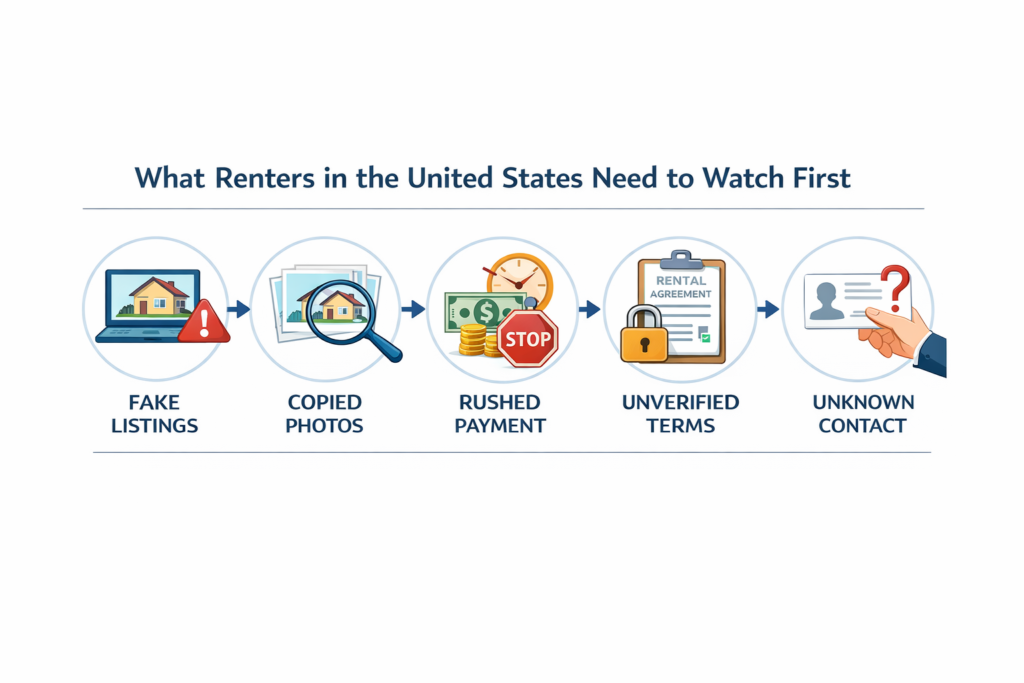
Because of that, renters should slow down and check the basics first. This usually means confirming that the property is truly available, that the contact person is tied to a real brokerage or owner, and that the rental terms can be reviewed before any money is sent. It also helps to watch for a below-market price, pressure to act immediately, or vague answers about lease terms. These are the kinds of issues that make a rental listing scam or application fee scam much easier to miss in practice.
Renting in the United States as a foreigner?
A United States real estate agent should explain early that renting as a foreigner often becomes harder for practical reasons, not because the listing itself is different. Many newcomers do not yet have a U.S. credit history, a local rental record, or a guarantor, so the pressure points usually appear during screening rather than during the first viewing.
The exact challenge can also change by location. In New York City, foreign renters often run into stricter income and guarantor expectations, especially in competitive buildings. Recent local guidance for international students notes that many landlords look for a U.S.-based guarantor and strong income support, which is one reason newcomers often turn to guarantor services or sublets first.
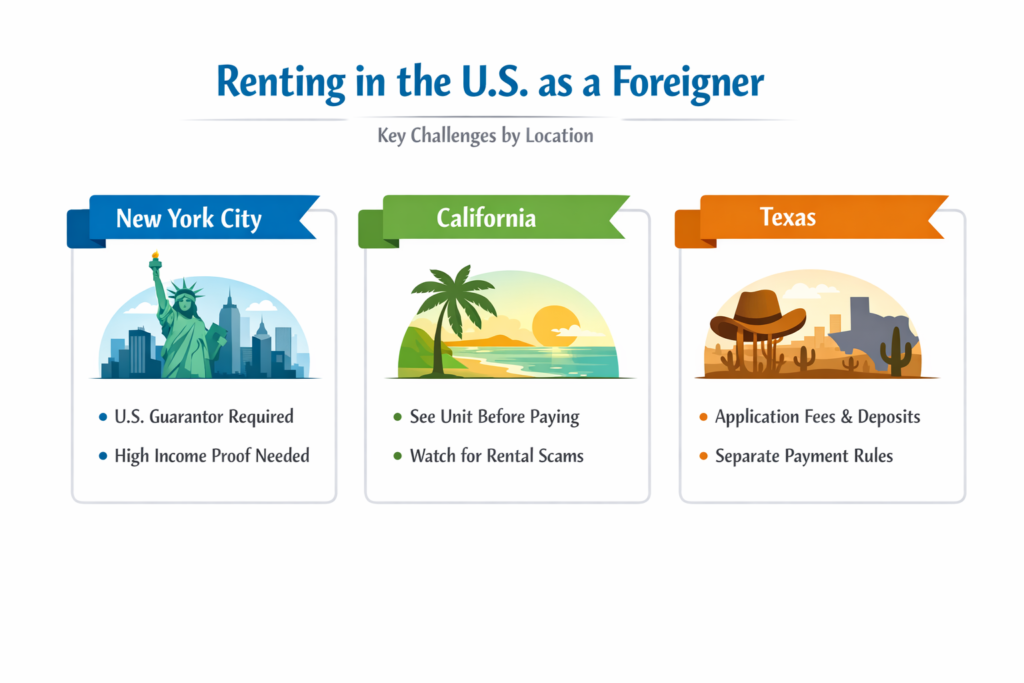
In California, the bigger issue is often caution around screening and upfront money. The California Attorney General warns renters not to send large payments before seeing the unit and signing a lease, even if the listing looks convincing online.
In Texas, it helps to know that an application fee, application deposit, and security deposit are treated as different payments with different rules, so a renter should not assume they all serve the same purpose.
That is why a good agent should do more than show units. They should explain what documents may be expected in California, New York City, or Texas before you start applying.
What buyers in the United States should understand before touring homes?
A United States real estate agent may ask buyers to agree to certain terms earlier than they expect. In today’s U.S. market, one of the most important things to understand is that a buyer may be asked to sign a written buyer agreement before touring a home with an MLS participant. The National Association of Realtors says that, in many cases, this written agreement is required before home tours, including live virtual tours.
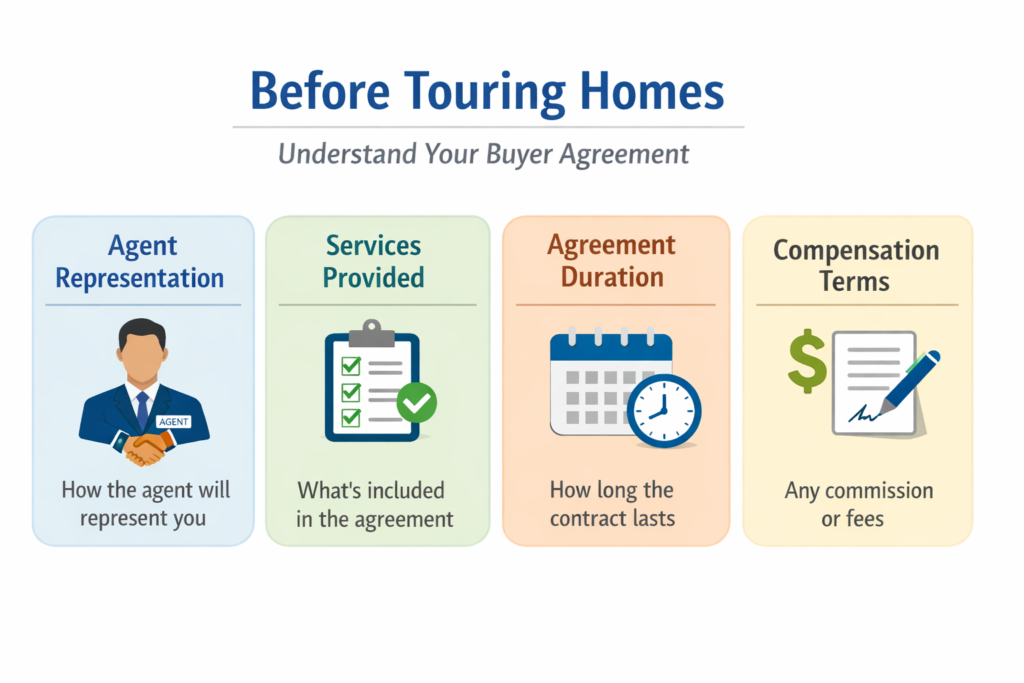
That matters because some buyers focus only on the property search and do not look closely at what the agreement says. Before touring, it helps to understand how the agent will represent you, what services are included, how long the agreement lasts, and whether any compensation terms are mentioned. NAR also says buyers can negotiate the services, term length, and compensation written into the agreement.
Once these points are clear, it becomes much easier to judge whether the agent is a good fit before the search becomes more serious
Buyer representation agreements in the United States
A United States real estate agent may ask a buyer to sign a representation agreement that explains how the working relationship will function. This document is important because it can define who the agent represents, what services are included, how long the relationship lasts, and whether the agreement is exclusive. NAR’s current consumer guidance says these agreements should clearly state the term, the services the agent will provide, and the compensation arrangement. It also says buyers should review the agreement carefully before signing.
This matters because not every agreement works the same way. Some may cover a short period or a narrow search area. Others may be broader. Buyers should pay close attention to how long the agreement lasts, whether it limits them to one agent, and what happens if the relationship is not a good fit. These details can affect flexibility later.
Once the agreement is understood clearly, the next step is to look at what buyers in the United States may be able to negotiate before signing.
What buyers in the United States can negotiate before signing?
A United States real estate agent may ask you to sign an agreement before the search moves further, but that does not mean the first version should be accepted without review. In the U.S., buyers may be able to negotiate parts of the agreement so it fits their situation better. NAR says buyers can discuss the services included, the length of the agreement, and the compensation terms before signing.
| What buyers often adjust | Why buyers look at it closely |
|---|---|
| Time period | To avoid being tied in too long |
| Search area | To keep the agreement limited |
| Type of service | To match the level of help needed |
| Exit terms | To reduce problems if the fit is poor |
This is where buyers should think less about the home and more about control. A broad agreement can be harder to leave later, especially if the terms are unclear from the start. Buyers usually benefit from checking whether the agreement is too wide, too long, or too restrictive for the stage they are in.
That said, let’s move to the next section, where we can discuss real estate agent fees and compensation in the United States, which is an important matter of concern worth being emphasized.
Real estate agent fees and compensation in the United States
A real estate agent should explain compensation clearly before the process becomes more serious. This matters because many buyers still assume fees work in one fixed way across the country, even though the details can differ by deal, market, and agreement. NAR’s current guidance says compensation is negotiable and should be written clearly in the buyer agreement rather than treated as something automatic or left unclear.
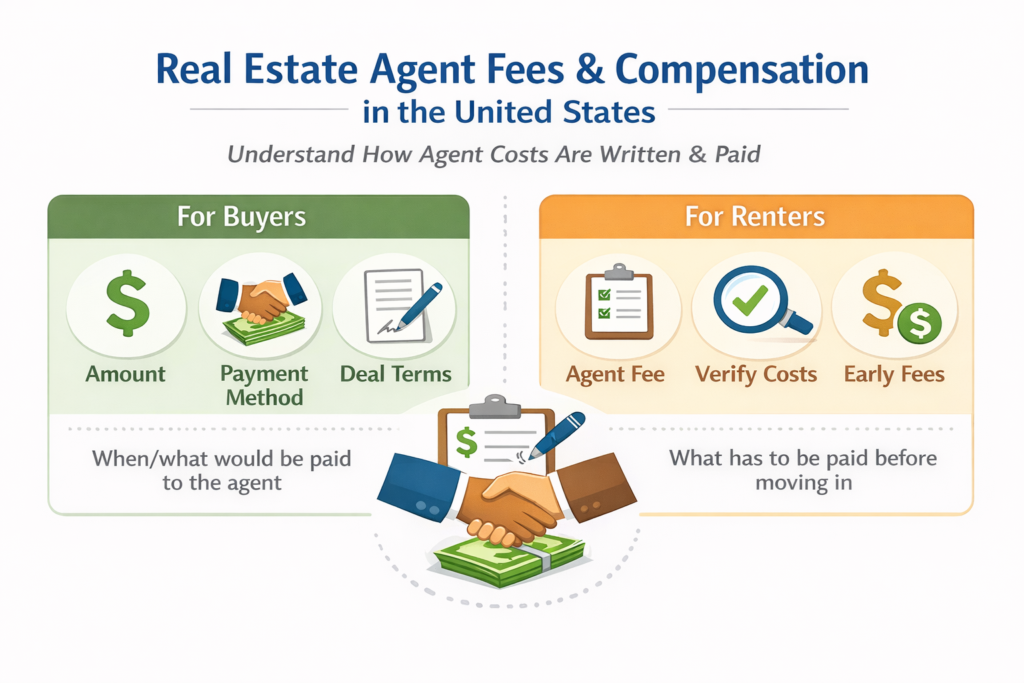
For buyers, the important point is not only how much may be paid, but also when, under what terms, and in what situation. If compensation language feels vague, that should be reviewed before signing. A buyer should understand whether the agreement explains the amount, the method, and what happens if the transaction structure changes.
For renters, the question is usually different. In many rental situations, people want to know whether an agent fee, broker fee, or application-related cost will appear before move-in. Because these costs can vary by market, it helps to ask for a full breakdown early.
Once compensation is clear, you also need to understand how to verify a real estate agent or listing before even considering committing.
How to verify a real estate agent or listing in the United States?
It should be easy to verify a real estate agent before you trust them with a property search, personal documents, or any payment. This step really matters because many people first find homes online, where a listing can look real even when the person behind it is not.
Start with the person. Check whether the agent is tied to a real brokerage and whether their license can be confirmed through the relevant state real estate authority.
Then check the listing itself. Make sure the same property appears with matching details across trusted platforms, and compare the contact information with the brokerage’s official website.
Important checks include:
state license or registration lookup
real brokerage name and website
matching phone number or email
consistent property details across platforms
Only after that should money enter the picture. The FTC warns that scammers often copy real rental listings, replace the contact information, and ask for an application fee, deposit, or rent before proper verification happens.
Once these basic checks are done, you can tap more safely toward lease terms, deposits, and application costs.
Application fees, deposits, and lease checks for renters
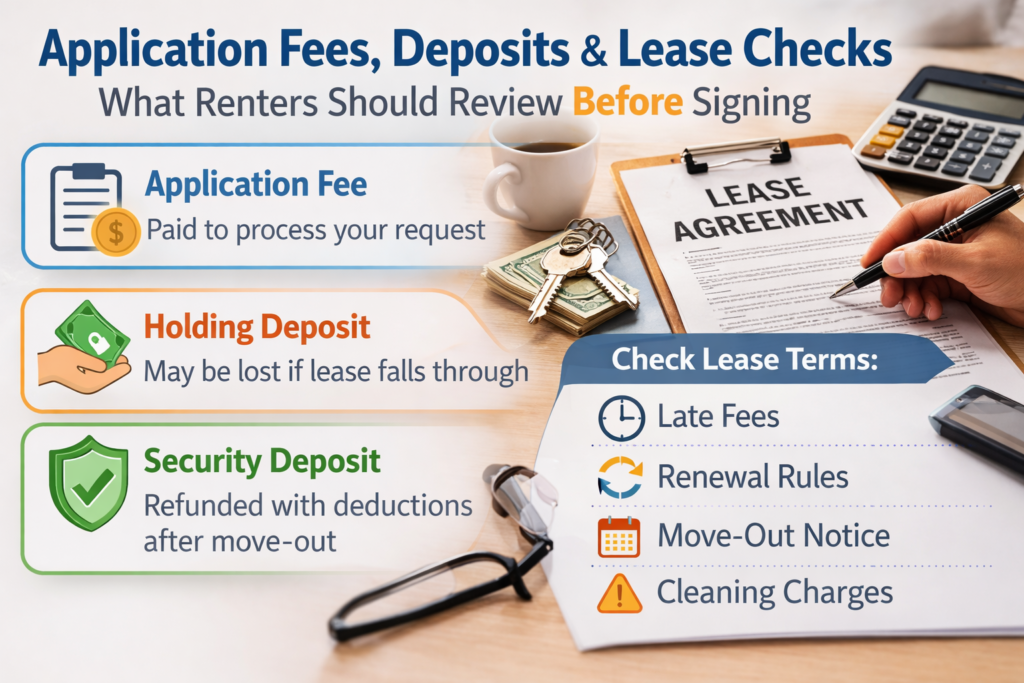
A good real estate agent should also help renters separate one payment from another before anything is signed. In the U.S., an application fee, a holding deposit, and a security deposit do not mean the same thing, and they may follow different rules depending on the state.
Texas guidance, for example, treats them as different payments with different protections, while general renter guidance also notes that a holding deposit can be lost under certain conditions if the lease does not move forward.
That is why renters should read the lease for the parts that affect money later, not only the rent amount today. Pay close attention to late-fee language, renewal terms, move-out notice requirements, cleaning charges, and rules that describe when deductions can be taken from a deposit. Those details often shape the real cost of the rental more than the listing price alone.
How Go Condo Atlas helps real estate agencies customers in the United States?
Go Condo Atlas helps renters and buyers start from a clearer position before they choose who to contact. After learning what to watch in listings, agreements, fees, and lease terms, the next step is finding a way to compare agents with more structure and less guesswork.
| What users need | How Go Condo Atlas helps |
|---|---|
| Better starting clarity | Makes agent research more organized |
| Stronger comparison | Helps users review agents side by side |
| More confidence before contact | Reduces reliance on random profiles alone |
| Useful local direction | Supports smarter next questions |
This matters because many people begin with scattered listings, mixed-quality profiles, and very little context about who is actually worth their time. That can search feel messy from the start, especially in a large market like the United States.
Go Condo Atlas helps make that process more focused. Instead of moving blindly from one listing or profile to another, users can approach the search in a more structured way and compare options with clearer intent. That does not replace personal judgment, but it gives renters and buyers a stronger base before they move forward.
Conclusion
A United States real estate agent can play a very different role depending on whether you are renting or buying, what state you are in, and how clearly the process is explained from the start. That is why this guide focused on the issues that matter most in the U.S., including rental scams, buyer agreements, agent compensation, verification, lease terms, and upfront costs.
For renters, the main priority is often reducing risk before money moves. For buyers, it is often understanding representation, agreement terms, and what support is actually included. In both cases, the same principle applies: a good agent should make the process easier to understand, not harder.
That is why it helps to slow down, verify carefully, and compare with purpose before making any decision. If you want a clearer starting point, Go Condo Atlas can help renters and buyers explore real estate agents in the United States with more structure and confidence from the beginning.
Frequently asked questions about real estate agents in the United States
How do I choose a real estate agent in the United States?
Choose a real estate agent in the United States by looking at how clearly the person explains the process, how well they understand your needs, and whether their professional details can be checked properly.
What should renters check before working with a real estate agent in the United States?
Renters should check whether the listing is real, whether the agent or brokerage can be verified, and whether fees, deposits, and lease terms are explained clearly before anything is paid.
What should buyers ask before signing with a real estate agent in the United States?
Buyers should ask what services are included, how long the agreement lasts, whether it is exclusive, and how compensation is handled before the relationship becomes more formal.
Can a buyer agreement in the United States be negotiated?
Yes. Current NAR consumer guidance says buyers can negotiate services, term length, and compensation before signing a written buyer agreement.
How can I verify a real estate agent or listing in the United States?
You can verify a real estate agent or listing by checking the brokerage, confirming license details through the relevant state authority, and matching the contact information across trusted sources.
Can Go Condo Atlas help me compare real estate agents in the United States?
Yes. Go Condo Atlas helps renters and buyers compare real estate agents in the United States in a more organized way before they move toward contact, viewings, or agreements.