
South Korea: Real Estate Broker Selection Guide for Renters and Foreigners
Choosing a real estate broker in South Korea should do more than show listings or arrange viewings. The rental process can involve housing systems, deposits, and document checks that feel unfamiliar to many renters, especially foreigners.
That is why this guide focuses on what matters most in this market: how agents explain jeonse and wolse, how they help reduce deposit risk, and how they support clearer decisions before any contract is signed.
Why a real estate broker matters more in South Korea than many renters expect?
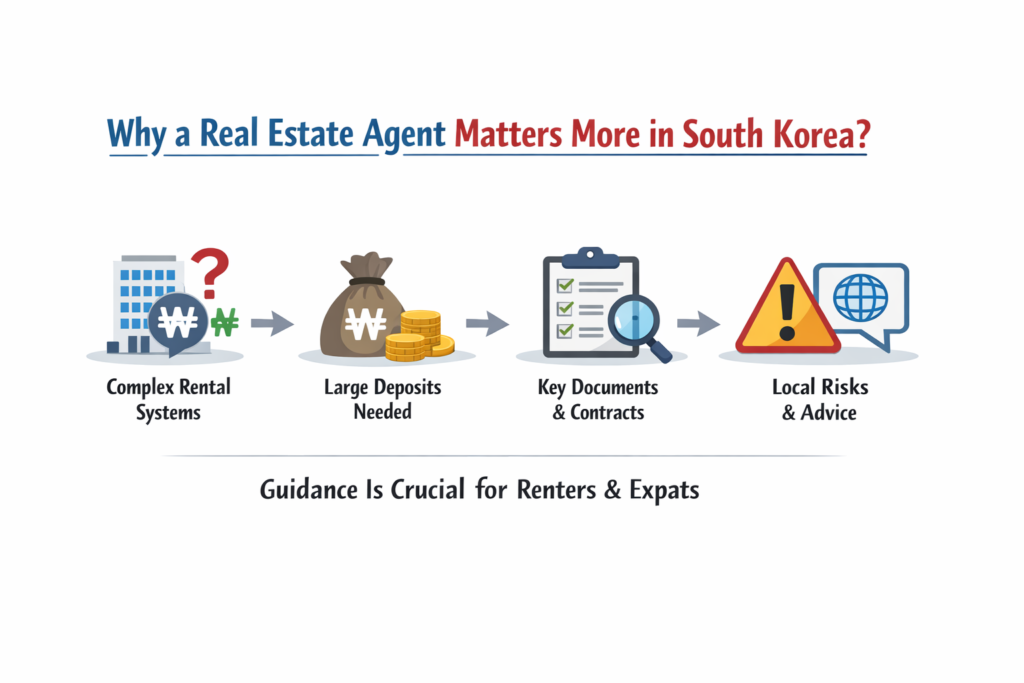
In South Korea, real estate broker often matter more than many renters first expect because the rental process can be harder to understand than it looks from the outside. At first, a listing may seem simple. Yet once you move beyond the photos and price, the process can involve unfamiliar rental systems, large deposits, document checks, and contract details that carry real weight if they are not explained clearly.
This is exactly where the difference appears. In some markets, an agent mainly helps people find available units. In South Korea, that is often not enough. A good agent should also explain how the rental structure works, what kind of payment is being requested, what documents should be reviewed, and what risks need attention before anything is signed.
This matters even more for foreigners and first-time renters. Language barriers, local housing terms, and large upfront amounts can make small misunderstandings much more serious. Because of that, the right agent does more than save time. They help renters understand the process before money moves and before the contract becomes harder to question.
That is also why the next thing we will cover is the rental structure itself, because in South Korea, the difference between jeonse and wolse can shape both the risk and the role of the agent from the very beginning. So, let’s move on!
Jeonse and wolse: what your agent should explain clearly?
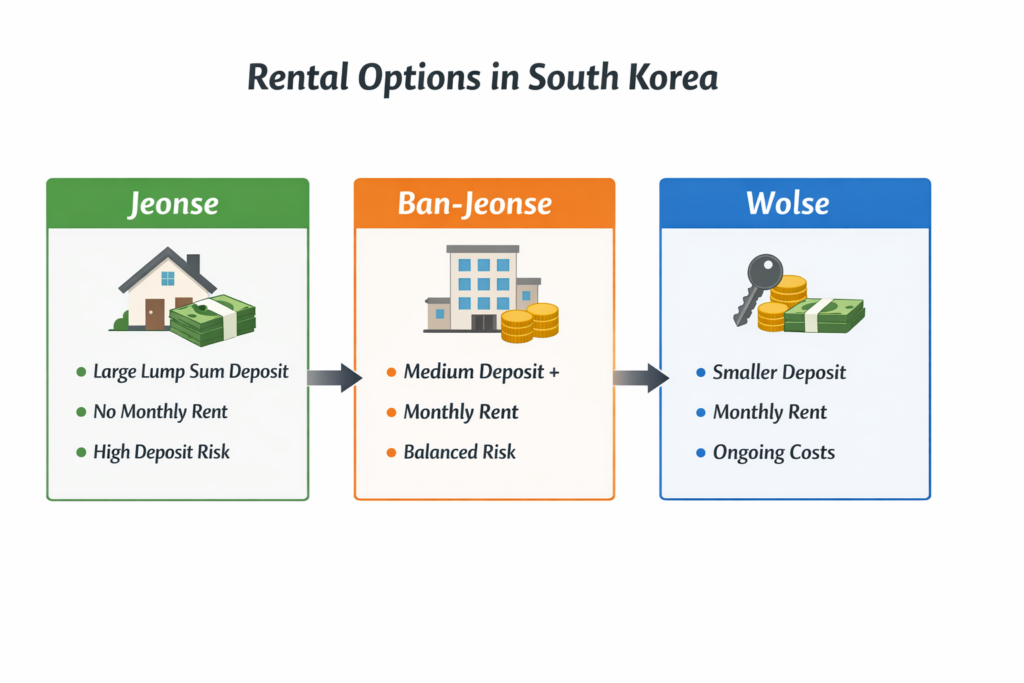
In South Korea, this is one of the first things a real estate agent should explain well, because the rental structure changes the deposit size, monthly cost, and overall risk.
Jeonse
Jeonse is a rental system where the tenant pays a very large lump-sum deposit and usually does not pay monthly rent during the contract period. Seoul’s English housing guide says jeonse contracts are commonly set for one to two years, with part of the deposit often paid first as a contract payment and the rest paid when moving in. The same guide also says the landlord must fully return the jeonse amount when the contract ends.
That sounds simple at first, but this is exactly where many renters, especially foreigners, need stronger guidance. A jeonse deposit can be so large that the biggest question is no longer monthly affordability. It becomes whether the deposit is protected well enough and whether the property is safe to rent under those terms. Seoul’s foreign-resident housing support now includes multilingual counseling specifically because jeonse scams and lease disputes have affected international residents as well as Korean citizens.
This is why a good agent should not only tell you what jeonse is. They should explain how much deposit is being asked, what ownership and registry checks matter, and why deposit-return risk needs to be taken seriously before anything is signed.
Wolse
Wolse is usually easier for foreigners to understand because it looks closer to a standard monthly rental model. In Seoul’s housing guide, wolse is described as a one- to two-year contract with a smaller deposit and a monthly rent payment. The guide also notes that the deposit is commonly around ten to twenty times the monthly rent and that unpaid rent or utilities can be deducted from the deposit at the end.
Even so, wolse should not be treated as simple just because the structure feels more familiar. The size of the deposit still matters, the contract terms still matter, and the tenant still needs to understand what happens if the agreement ends early or if money is deducted later. This is also where foreigners often need a clearer explanation of fees, local housing terms, and what is included in the deal. Seoul now operates hundreds of global real estate agencies and multilingual lease counseling for this exact reason: foreign residents often need help turning familiar-looking rental terms into something they can actually verify and trust.
Once jeonse and wolse are clear, the next question becomes more serious: how to reduce deposit risk and avoid problems before signing.
Ban-jeonse: why some rentals in South Korea sit between jeonse and wolse?
Ban-jeonse is the rental model many foreigners miss at first, even after they think they understand jeonse and wolse. In simple terms, ban-jeonse sits between the two. It usually involves a medium-sized deposit together with a lower monthly rent, which makes it feel more manageable than full jeonse while still demanding much more cash upfront than a standard wolse contract. Current Korea housing guides aimed at foreigners still describe ban-jeonse as this blended middle option, and they note that it is popular with longer-term renters who want a balance between deposit size and monthly cost.
This matters because ban-jeonse can look safer or simpler than it really is. The monthly rent may seem reasonable, but the deposit is still important enough that contract terms, ownership checks, and deposit-return conditions must be reviewed carefully. A good agent should explain not only the structure itself, but also why this middle-ground option still carries real financial weight before you sign.
How to read ownership and registry checks before signing in South Korea?
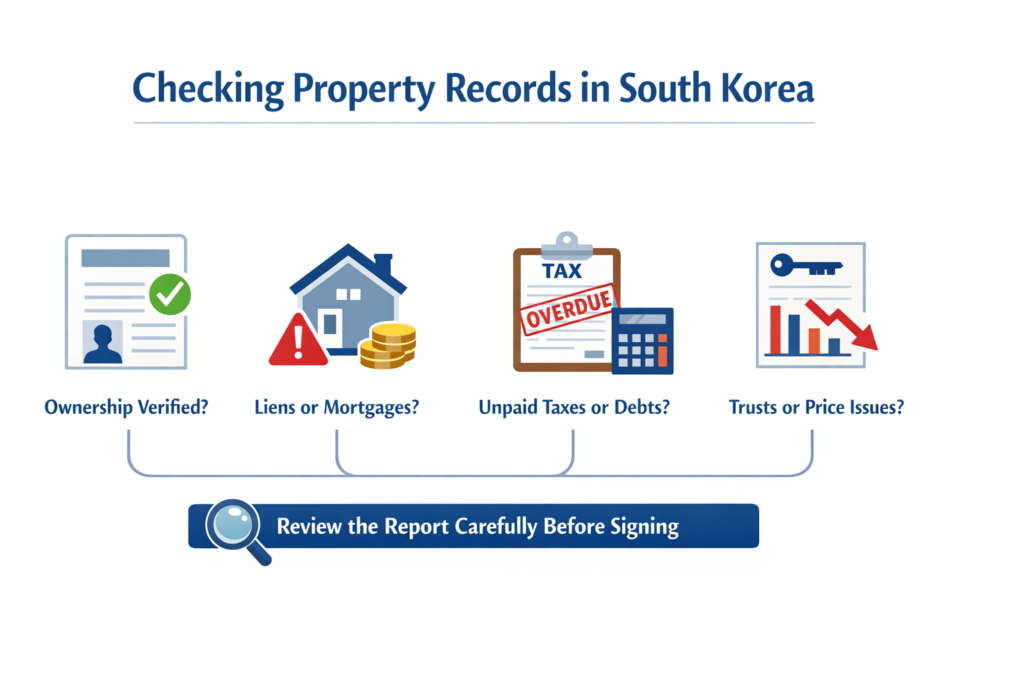
Before signing, one of the most useful things a real estate broker in South Korea can do is explain the ownership record in a way you can actually understand. This matters because many renters hear that a registry check is important, yet they are not always told what they should be looking for inside it.
At a practical level, the goal is simple. You want to confirm that the person renting out the property has the legal right to do so, and you want to see whether there are claims on the property that could affect deposit safety later. Seoul’s foreign-resident guidance specifically warns tenants to check ownership, liens, tax issues, trust registration, and price levels before signing higher-risk contracts.
That is why this step should never feel rushed. A good agent should walk you through the record, explain what looks normal, and tell you clearly what could create risk before your deposit becomes harder to protect later.
How to reduce deposit risk before signing in South Korea?
Once jeonse and wolse are clear, the next issue is deposit risk. In South Korea, this matters because the amount involved can be large, and a renter may not fully understand the danger until much later. A good real estate agent should help you check the property and the contract before the deposit becomes harder to protect.
| What to check | Why it matters |
|---|---|
| Property ownership | Confirms who has the legal right to rent it out |
| Existing loans or liens | Can affect deposit safety later |
| Market price level | Helps spot unusual or inflated terms |
| Contract details | Reduces confusion before money moves |
This is where careful explanation matters most. Seoul’s foreign-resident housing guidance warns renters to check ownership, mortgage or lien status, trust registration, and the real market value before signing, especially in higher-risk lease situations. These checks are not minor details. They can affect whether the deposit is easier or harder to recover if something goes wrong.
Because of that, a strong agent should not rush the process. They should help you understand what is being checked, why it matters, and what looks unusual before the contract is finalized. Once deposit risk is clearer, the next step is to look at what foreigners in South Korea should check before signing any rental agreement.
What foreigners in South Korea should check before signing a rental agreement?
For foreigners, the rental process in South Korea can feel clear at first and then suddenly become much more technical. That is why a real estate agent should help you understand not only the unit, but also the documents, the language, and the risks that may not be obvious at the start.
One important point is identity and authority. You need to know who owns the property, who has the right to rent it out, and whether the contract details match the actual property record. This matters even more when the process is moving through translation, because small wording gaps can create larger misunderstandings later.
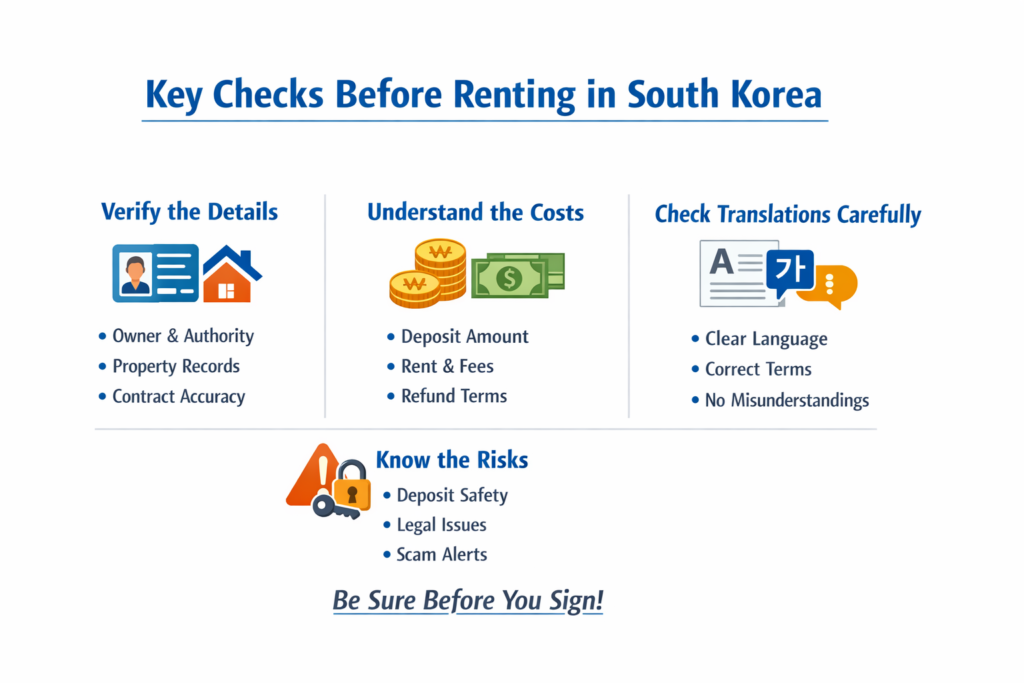
Foreigners should also pay close attention to the payment structure, the deposit amount, and the terms for getting that deposit back at the end of the lease. In Seoul, multilingual lease counseling for foreign residents was expanded partly because international tenants were still facing confusion around lease terms and deposit-related risk.
That is why signing should never be treated as the final simple step. Before that point, a foreign renter should be fully clear on the contract, the money, and the legal position of the property. Once those basics are in place, it becomes easier to understand how brokerage fees and contract checks work in South Korea.
Brokerage fees and contract checks in South Korea
After the main rental risks are clear, the next thing to understand is how brokerage fees and contract checks in South Korea work. This matters because renters sometimes focus only on the deposit and monthly cost, then overlook the extra charges and document details that shape the final deal.
A good real estate agent should explain:
-
how the brokerage fee is calculated
-
when the fee becomes payable
-
what parts of the contract should be reviewed before signing
-
which terms affect deposit return, notice, or early exit
In Seoul, official guidance explains that brokerage fees are usually capped by law and can vary depending on the transaction value and property type. That means the fee should not feel vague or invented at the last moment. It should be explained clearly before the contract is finalized.
This is also where contract checks matter. A renter should understand the payment schedule, lease term, special conditions, and any wording that affects the deposit. Once these details are clear, it becomes easier to see how Go Condo Atlas helps users compare real estate agents in South Korea.
What renters in South Korea should know about delayed or failed deposit return?
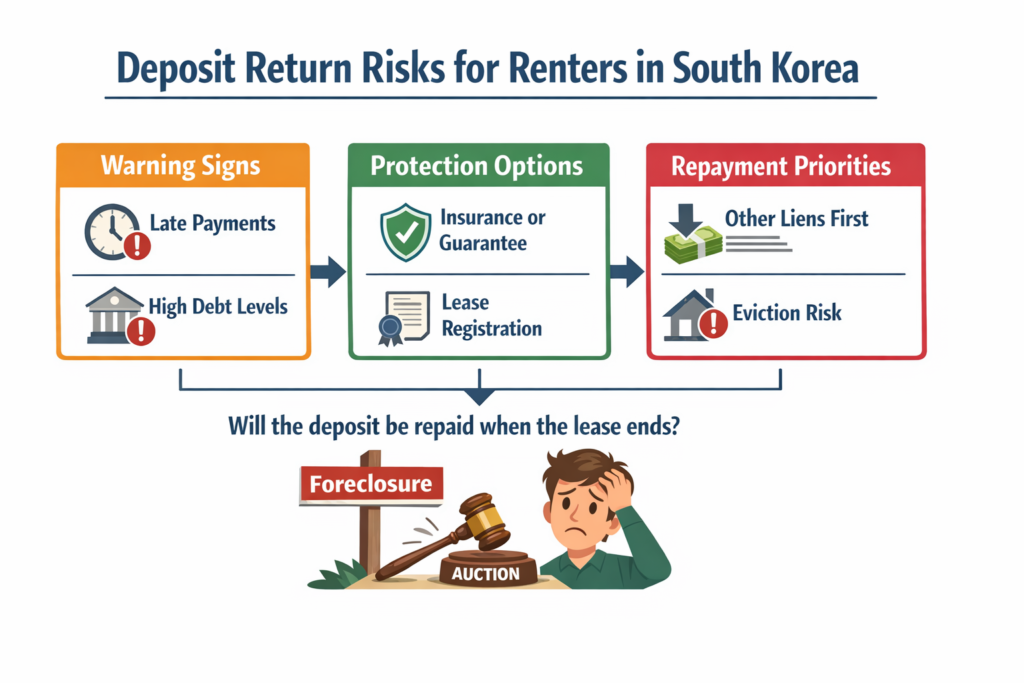
One of the biggest fears in South Korea is not the contract itself, but what happens at the end if the landlord cannot return the deposit on time. This matters even more in jeonse or ban-jeonse arrangements, where the amount involved can be large enough to affect savings, relocation plans, and financial stability in a serious way.
That is why a good real estate agent should not treat deposit return as a small detail to discuss later. They should help you understand what protections may apply, what warning signs deserve attention before signing, and what kind of ownership or debt situation could make repayment harder at the end of the lease.
This is also where renters need to think beyond the listing. A property may look acceptable on the surface, yet the real risk may sit behind the landlord’s financial position or the order in which claims would be handled if something goes wrong. Before signing, that part deserves clear explanation, not assumptions.
Conclusion
Choosing a real estate agent in South Korea should be about more than speed or listings. In this market, renters need someone who can explain jeonse, wolse, deposit risk, contract terms, and brokerage fees in a clear way. This matters even more for foreigners, who may face language barriers and unfamiliar housing rules. A good agent helps you understand the process before money moves, which can reduce confusion and avoidable problems later.
Frequently asked questions about real estate agents in South Korea
How do I choose a real estate agent in South Korea?
Choose a real estate agent in South Korea by looking at how clearly they explain the rental structure, deposit risk, contract terms, and local process. A good agent should make jeonse, wolse, and key document checks easier to understand before any money moves.
Why do renters in South Korea need more explanation than in some other countries?
South Korea often requires more explanation because the rental structure itself can carry more weight. A listing may look simple at first, but the real risk often sits in the deposit, contract wording, ownership checks, and the way the payment system works.
What should I ask an agent before signing a jeonse contract?
Ask who owns the property, whether there are existing loans or claims on it, what protections apply to the deposit, and what conditions could affect deposit’s return later. These questions matter because jeonse risk is often tied more to property status than to the listing itself.
Why can a rental in South Korea look affordable at first and still become risky later?
This usually happens when renters focus only on the visible monthly cost or the size of the deposit without understanding the legal and financial details behind the property. In South Korea, the real issue is often not the listing price itself, but what stands behind the contract.
What makes a real estate agent especially helpful for foreigners in South Korea?
For foreigners, the best agent is not only someone with listings. It is someone who can explain local housing terms, payment logic, contract wording, and practical risks in a way that reduces confusion. Language support matters, but clear judgment matters even more.
How can Build Condo Atlas help me find a real estate agent in South Korea?
Build Condo Atlas helps users compare real estate agents in South Korea with more structure before making contact. That can make it easier to review options, understand the market better, and begin the rental search with clearer direction.