
How to Verify a Real Estate Broker in the Philippines in 2026?
Verifying a real estate broker in the Philippines is one of the most important steps before you rent, buy, or send any money. In this market, people often worry about licensed brokers, authority to lease, reservation fees, and whether the person handling the unit is actually allowed to represent it. This matters even more for foreigners, who may not know the local process well. This guide explains what to check, what warning signs to notice, and how to verify a real estate agent in the Philippines with more confidence.
Why real estate broker verification matters in the Philippines?
In the Philippines, verifying real estate brokers matters early. It should not be something you check after the listing already looks good. A property may seem attractive at first. Still, that does not tell you whether the person behind it is properly licensed or truly allowed to handle the deal.
This is where many problems begin. Some people focus on the unit, the photos, or the price. Meanwhile, the more important question remains unanswered: who is actually representing the property, and do they have the authority to do so?
That point matters a lot in the Philippines. Renters and buyers often worry about licensed brokers, the authority to lease, and payment requests that come too soon. If those parts stay unclear, the process can become risky very quickly.
So, before you think about paying anything, it helps to check the person first. That is also why the next step is so important: understanding how to verify whether a real estate broker in the Philippines is properly licensed.
How to check whether a real estate broker in the Philippines is licensed
In the Philippines, a licensed real estate broker should be easier to verify than many people first think. That is why this step should come before serious discussion about payment, reservation, or signing. If the broker cannot be checked properly, that should already slow the process down.
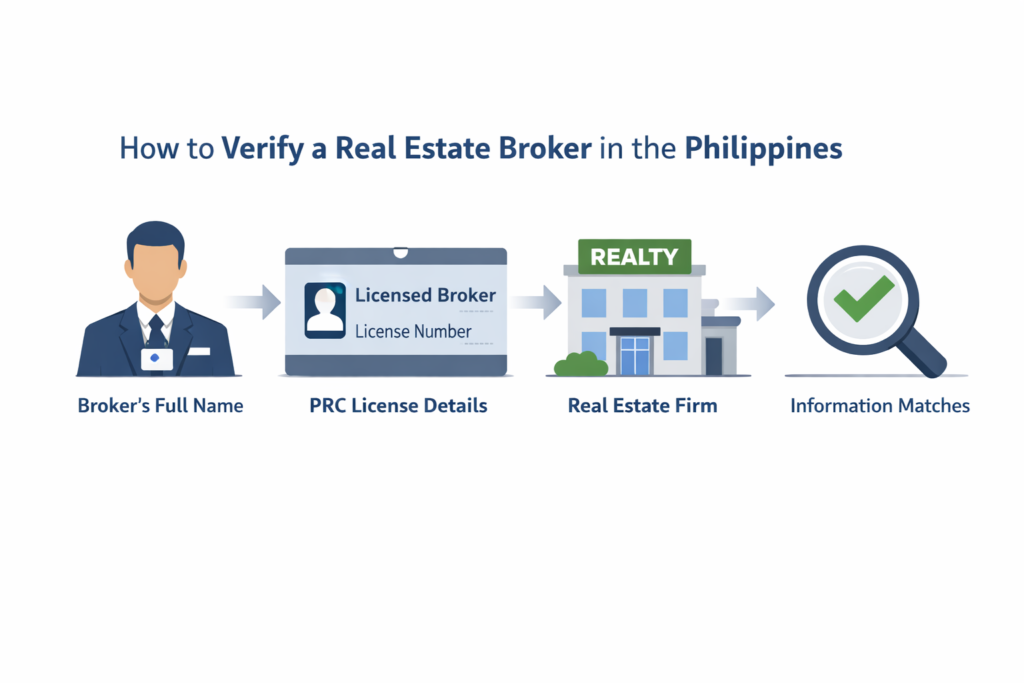
A few of the most useful things to check are:
the broker’s full name
their PRC license details
the real estate firm or office they work with
whether the information matches what they gave you
This matters because a profile, listing, or social media page is not enough on its own. A person may look active online and still give you very little proof that they are properly authorized to act as a broker. In the Philippines, the Professional Regulation Commission is the main reference point people use when checking whether a real estate broker is officially licensed.
So the goal here is simple. You are not trying to make the process difficult. You are trying to make sure the person is real, licensed, and easier to trust before the deal moves further. Once that part is clear, the next thing to check is whether the property itself is backed by proper authority to lease.
Why authority to lease matters before you pay anything?
In the Philippines, the authority to lease matters before payment, not after. A broker may be licensed and still not have the right to offer a specific unit unless the owner has allowed it. That is why checking the person is only one part of the process. The property itself must also be tied to real authority.
Hence, never assume that a listing is enough proof. In practice, it is not. A unit may be advertised, discussed, and even reserved before the renter clearly sees whether the broker has formal permission to handle it. Public discussion in the Philippines keeps returning to this point, especially in condo rentals, where people are told to verify both the broker and the owner’s side before moving forward.
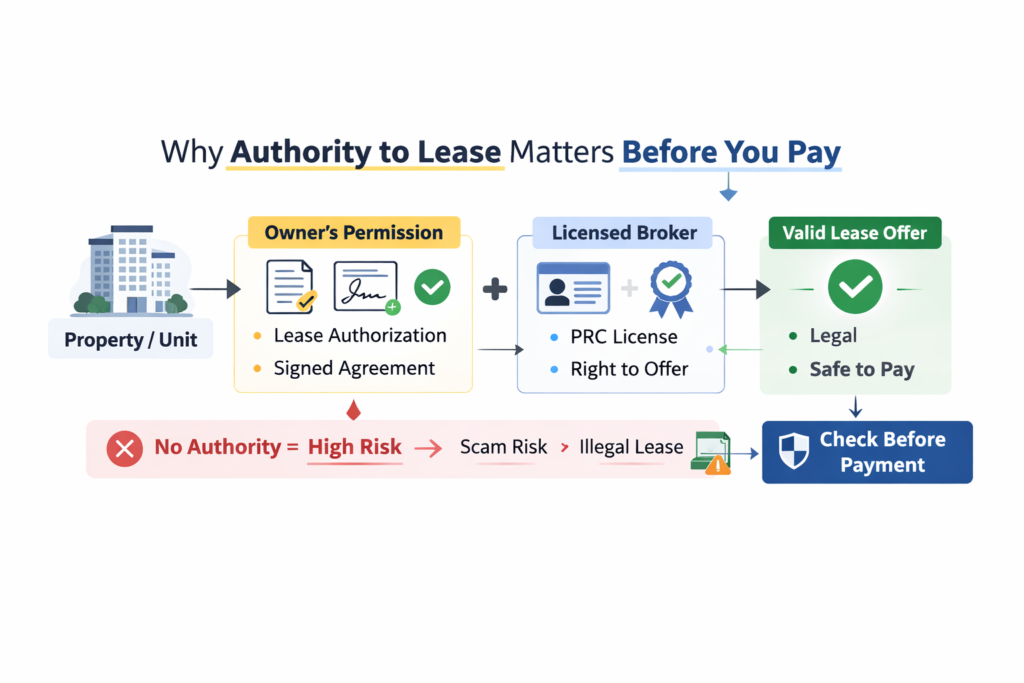
That said, before you send any reservation fee, deposit, or advance payment, make sure the unit is being handled with proper authority. That can help reduce confusion very early. Once that part is clear, the next thing to understand is why reservation fees and early payment pressure create so much concern in the Philippines.
Reservation fees and early payment pressure in the Philippines
In the Philippines, reservation fees and early payment pressure deserve careful attention because this is where many renters begin to lose control of the process. A unit may look appealing, the broker may sound convincing, and the conversation may move quickly. Still, speed is not proof. Before money changes hands, the renter should understand what the payment is for, when it becomes due, and what protection exists if the deal does not move forward.
| Payment situation | What it usually means | What to check before paying |
|---|---|---|
| Reservation fee | A payment meant to hold the unit temporarily | Whether terms are written clearly and whether it is refundable |
| Advance rent | A payment linked to the first rental period | Whether the lease is already finalized |
| Security deposit | Money held against damage or unpaid obligations | How and when it will be returned |
| Unclear “processing” payment | A vague extra charge | Why it exists and who requested it |
Renters in the Philippines often become uneasy when money is requested before the contract is fully clear. That concern makes sense. Each payment should have a defined purpose, a clear timing, and written terms that can be reviewed calmly. Once the payment side is understood better, the next issue becomes more practical: what a 2-month deposit and 1-month advance usually mean in real rental situations across the Philippines.
What 2 months deposit and 1 month advance usually means in practice?
In the Philippines, 2 months deposit and 1 month advance is one of the payment structures renters hear most often, especially in condo rentals. On paper, it can sound simple. In practice, it means you may need to prepare three months of rent before move-in, and that can change how affordable a unit really is from the start. Public rental discussions in the Philippines keep returning to this point because first-time renters often focus on the monthly rate first, then realize the upfront amount is much heavier than expected.
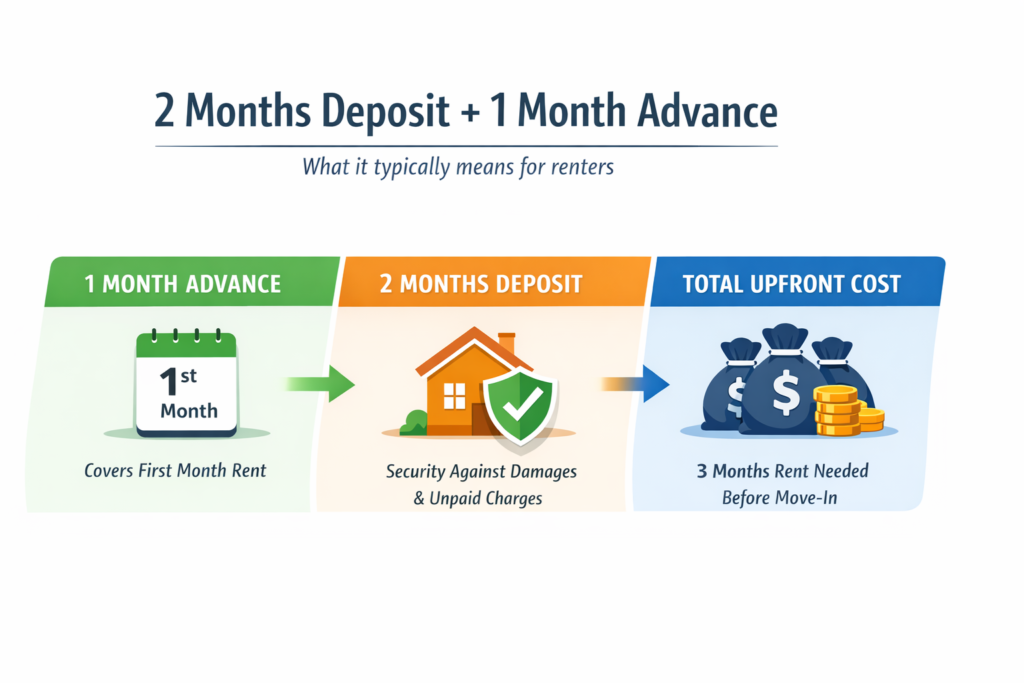
The advance payment usually covers the first rental month. The deposit, however, serves a different purpose. It is normally held against unpaid obligations, damage, or other deductions that may appear at the end of the lease. That is why renters should not only ask how much is due, but also how the deposit may be used, what deductions are allowed, and when the remaining amount should be returned. Once the upfront structure is clearer, the next issue is broker commission and who is expected to pay it.
Broker commission in the Philippines: what renters should clarify early
In the Philippines, broker commission should be discussed early, not left until the unit already feels emotionally chosen. Renters often understand rent, deposit, and advance payment first. After that, the commission becomes the next point of confusion, especially when nobody explains clearly who pays it, when it becomes due, or what service it actually covers. Public rental discussions show that this uncertainty often appears in condo searches and first-time rental situations.
| What to clarify | Why it matters |
|---|---|
| Who pays the commission | Avoids late surprises |
| How much is being charged | Helps compare the real total cost |
| When it becomes payable | Prevents rushed payment decisions |
| What service does it covers | Shows whether the fee makes sense |
A broker fee may sound small beside the deposit, yet it still changes the real move-in cost. That is why the commission should be treated as part of the full rental picture. Once this is clear, the next thing to examine is condo dues, utilities, and other monthly costs beyond rent.
Condo dues, utilities, and monthly costs beyond rent in Philippines
In the Philippines, rent is only one part of the monthly picture. Before signing anything, renters should understand which costs are included, which are separate, and which can change later.
Condo dues in Philippines
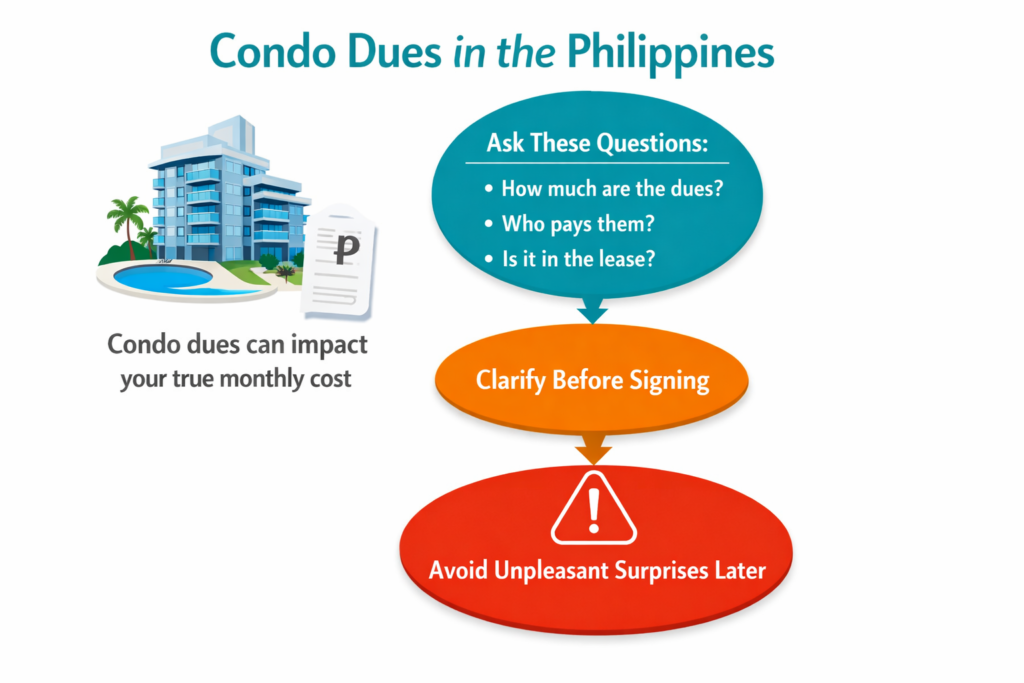
Condo dues in the Philippines are one of the first things renters should clarify because they can change the real monthly cost more than expected. In some listings, dues are already included in the rent. In others, they are charged separately, which means the price you first noticed is not the full amount you will actually pay each month.
This is why a renter should never assume that the posted rent already covers building-related charges. Ask how much the dues are, who pays them, and whether that arrangement is written clearly into the lease. If the answer stays vague, that should not be ignored.
A unit may look affordable at first, yet feel very different once dues are added. That is why this part should be made clear before the lease reaches the signing stage.
Utilities and internet in Philippines
Utilities and internet in the Philippines should also be clarified early because they shape the real cost of living in the unit after move-in. A renter should know whether water, electricity, and internet are billed directly, paid through the landlord, or handled under a different arrangement.
This matters because the payment method can affect both the monthly cost and transparency. For example, a tenant may assume utilities follow normal provider billing, then later discover that the charges are passed through in another way.
The Internet can also become an issue if installation, transfer, or monthly payment is not explained from the start. These details may seem small beside rent and deposit, but they affect daily life much more directly. Once they are clear, the last monthly-cost question becomes easier to judge: what other charges may still appear beyond the obvious ones.
Other recurring charges in Philippines
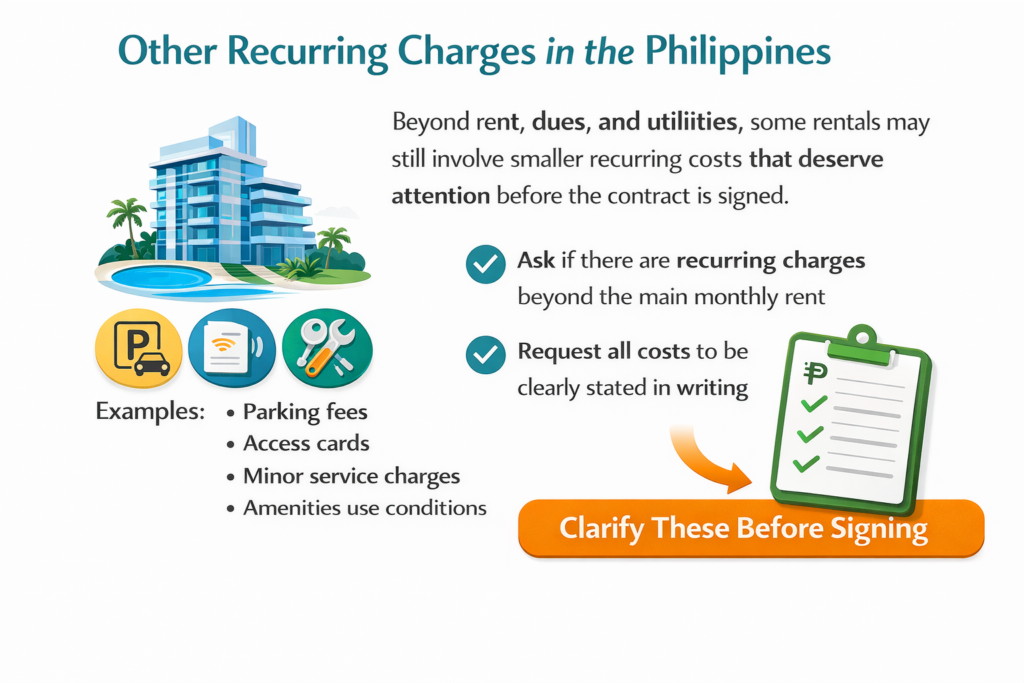
Beyond rent, dues, and utilities, some rentals may still involve smaller recurring costs that deserve attention before the contract is signed. These can include parking, access cards, minor building service charges, or special conditions tied to the use of amenities.
Not every unit will have these, but the problem begins when they are mentioned too late or not explained fully at the start. A renter should ask whether there are any regular payments beyond the main monthly rent and request that all important charges be stated clearly in writing.
This helps prevent the situation where the unit seems manageable on paper but becomes heavier once all real monthly obligations appear. When these cost layers are fully clear, the next section can focus on what foreigners and expats should check before signing in the Philippines.
What foreigners and expats should check before signing in the Philippines?
For foreigners and expats, renting in the Philippines often requires a bit more caution before signing. The unit itself may look fine, yet the bigger issue is whether the process around it is clear enough. It helps to confirm who owns the property, who is authorized to lease it, and whether the broker handling the unit can be properly verified.
At the same time, foreigners should pay close attention to payment structure, lease length, deposit return terms, and any costs that may sit outside the advertised rent. This matters because local rental practice can feel familiar on the surface, while the actual contract and payment expectations may still differ in important ways. Language clarity also matters.
If any part of the agreement feels vague, it should be explained before signing, not after. Once these checks are in place, the process becomes easier to approach with more confidence and fewer avoidable misunderstandings.
Legal and government checks foreigners should know in the Philippines?
For foreigners, renting or buying in the Philippines should include a few official checks before money or documents move. The first is the broker’s license. The Professional Regulation Commission allows users to verify whether a real estate broker is properly licensed, which makes this one of the most useful early checks.
The second is immigration status and identification. Foreign nationals who stay longer-term may need to understand ACR I-Card-related requirements through the Bureau of Immigration, especially if the rental will support a longer stay or local setup.
The third is contract-related tax formalities. Lease documents in the Philippines can involve Documentary Stamp Tax, and BIR forms and lease templates show why contract paperwork should not be treated casually.
Because of that, a foreign renter should not rely only on the listing or the broker’s word. It is safer to check the license, understand the immigration side, and make sure the lease paperwork is handled properly before signing.
How Go Condo Atlas helps you verify real estate agents in the Philippines?
Go Condo Atlas helps users start from a clearer position before they trust a broker, pay a fee, or move toward signing. In the Philippines, that matters because many renters first see listings through scattered posts, mixed-quality profiles, or informal agent pages that do not give enough proof on their own.
A platform like Go Condo Atlas makes the process easier to approach with more structure. Instead of relying only on what a listing says, users can compare agents in a more organized way and focus on the checks that matter most, such as verification, authority, payment clarity, and rental fit. That stronger starting point can save time and reduce confusion early.
For renters, buyers, foreigners, and expats, this kind of support adds value before the first viewing even happens.
The Takeaway
Verifying a real estate agent in the Philippines should come before trust, payment, or signing. A listing may look fine at first, yet the more important questions sit behind it: whether the broker is licensed, whether the unit is backed by proper authority, and whether the payment terms are clear from the start.
These checks matter for locals and even more for foreigners. When verification happens early, renters can approach the process with more confidence, fewer blind spots, and a better chance of avoiding weak decisions later.
Frequently asked questions about verifying a real estate agent in the Philippines
How do I verify a real estate agent in the Philippines?
Start by checking whether the broker is properly licensed and whether the details they give you match a real office or firm. After that, check whether the property itself is being offered with proper authority before you discuss payment.
Why is verification so important before paying anything?
Verification matters because a listing alone does not prove that the person behind it is properly licensed or allowed to handle the unit. It helps reduce risk before reservation fees, deposits, or advance payments enter the process.
What should I check before paying a reservation fee in the Philippines?
Before paying a reservation fee, check who is handling the unit, whether the broker can be verified, whether the authority to lease is clear, and whether the payment terms are written in a way you can review calmly.
What does 2 months deposit and 1 month advance usually mean?
This usually means you may need to prepare three months of rent before move-in. The advance payment often covers the first month, while the deposit is normally held against damage, unpaid obligations, or other allowed deductions.
What monthly costs should renters in the Philippines check besides rent?
Renters should also check condo dues, utilities, internet, parking, and any recurring building-related charges. These costs can change the real monthly total more than many people expect at first.
How can Go Condo Atlas help me verify a real estate agent in the Philippines?
Go Condo Atlas helps users compare agents in a more structured way before trust, payment, or signing. That can make it easier to review key details and begin the rental process with more clarity.