

A Quick Guide to Choosing a Real Estate Broker in Thailand
Choosing a real estate broker in Thailand takes more than picking someone with many listings. You need someone who understands the local market, explains the process clearly, and helps you avoid weak decisions.
This matters even more if you are buying, renting, or investing from abroad. In this guide, you will learn what to look for, what warning signs to watch, and how to choose an agent in Thailand with more confidence. We will touch on all the necessary points, so you will know what to do and not worry whether you are an expat, digital nomad, or local residing in Thailand
Why choosing the right estate broker in Thailand matters?
In Thailand, the difference between a helpful broker and a weak one can affect far more than the search itself. It can shape how clearly you understand the unit, the owner, the contract, the fees, and the next steps. That matters even more if you are renting or buying from abroad.
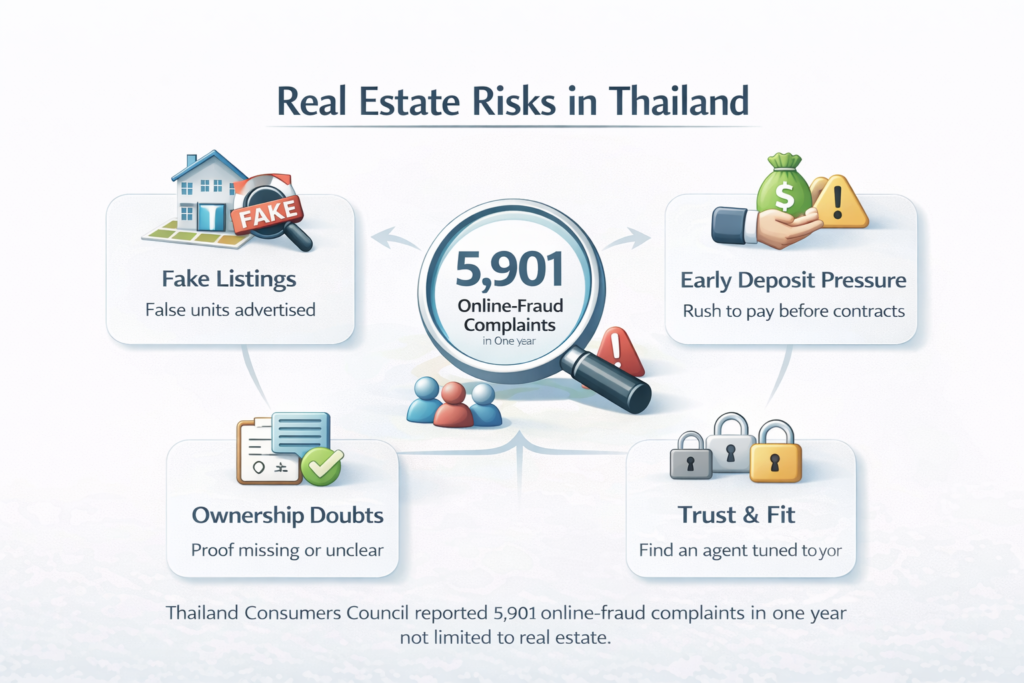
Part of the reason is simple: some risks are real. In Bangkok forums, renters and buyers often warn about fake listings, pressure to pay deposits too early, missing proof of ownership, or agents asking for money before a proper contract is shown. In one Reddit discussion, users advised not to pay anything until a lease agreement, owner ID, and proof of condo ownership were provided. In another, users warned that listings on Facebook can look attractive but turn out to be fake or misleading. These are not official statistics, but they do reflect common concerns people keep raising.
There is also a wider trust issue in the background. Thailand’s consumer-protection framework for residential leases was tightened in 2025, with new OCPB rules taking effect on September 4, 2025, to address tenant grievances and unfair lease practices for professional landlords. More broadly, Thailand Consumers Council data cited in late 2025 showed 5,901 online-fraud complaints over one year, though that figure covers online fraud in general, not property alone.
That is why choosing the right real estate agent in Thailand is not only about convenience. It is also about reducing avoidable risk.
Signs of a good real estate broker in Thailand
While choosing the real property broker, some warning signs can appear early, even before your search becomes serious. It is better to notice them at the start than deal with bigger problems later. That’s why a weak agent may sound helpful at first, yet their actions often show a different picture. In Thailand, this can become risky when money, documents, or unit details are involved.
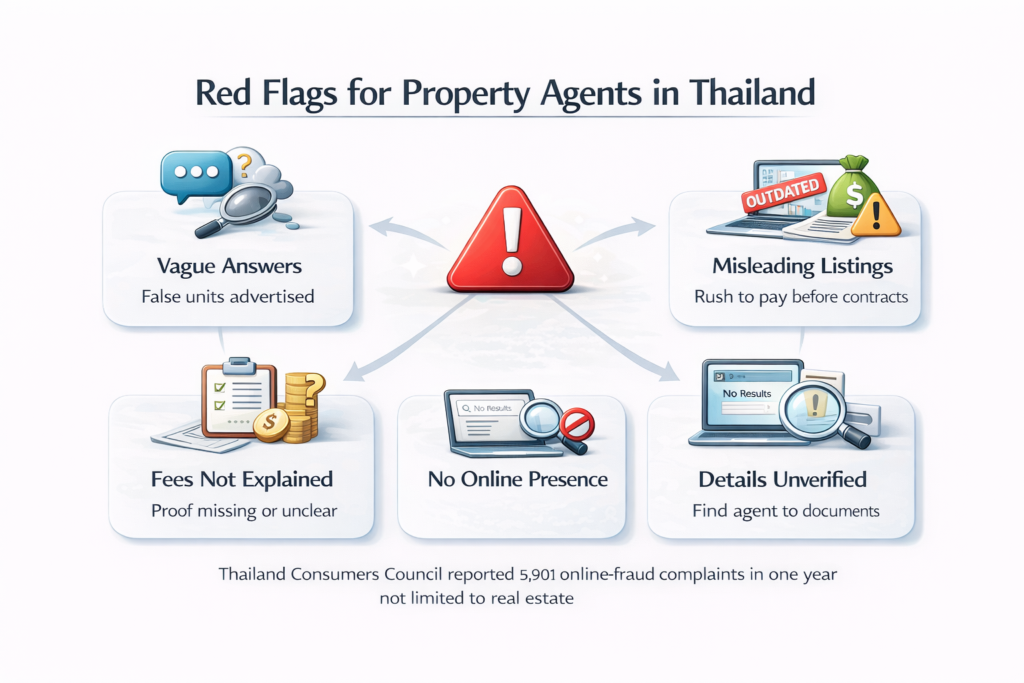
Common red flags include:
vague answers about the property
pressure to transfer money too early
outdated or misleading listings
weak explanation of fees or terms
no clear digital presence or checkable background
little effort to verify key details
You should also be careful if the agent has no real online footprint. If you cannot find basic business information, listing history, platform activity, Google Business Prof,ile, or any sign of professional presence, that should raise questions.
Another concern is speed without clarity. Fast replies may seem helpful, but if they come with pressure and little detail, they do not add much value. A good agent should help you move forward with confidence, not confusion.
That is also where Go Condo Atlas can help. The platform makes it easier to review verified agents and check useful information before you decide who to trust.
Questions to ask a real estate agent in Thailand
Moreover, a property agent in Thailand should be able to answer clear questions without making the process sound vague, rushed, or harder than it is. Before you choose who to work with, it is worth asking a few direct questions that help you understand whether the person is actually reliable.
Start with the property itself. Ask whether the unit is still available, who is authorized to represent it, and whether key details can be checked before any payment is discussed. This is important because some buyers and renters in Thailand have shared concerns online about outdated listings, unclear representation, and early pressure around deposits.
It also helps to ask about the full process. Ask what fees may apply, what the contract usually includes, how deposits are handled, and what steps come before signing. If the agent cannot thoroughly explain these things, that should not be ignored.
The goal is not to ask difficult questions for the sake of it. The goal is to see whether the agent gives clear, steady, and useful answers. Once you know how they respond, it becomes easier to compare them with other options.
How to compare property agents in Thailand?
In fact, a real estate agent in Thailand should not be judged only by how many listings they send or how fast they reply. A better comparison comes from looking at how clearly they explain things, how well they understand the local market, and how much confidence they give you before any serious step is taken.
When you compare agents, it helps to look at a few practical areas side by side.
| What to compare | What to notice |
|---|---|
| Communication | Are the answers clear, direct, and easy to follow? |
| Local knowledge | Can the agent explain the area, building, and price level well? |
| Transparency | Do they explain fees, process, and next steps properly? |
| Verification | Do they help check details before payment or signing? |
| Professional presence | Can you find real activity, listings, or trusted proof online? |
One agent may reply faster, while another may explain the process better. One may know the neighborhood well, while another may only repeat what is already in the listing. These differences matter because they affect how safely and smoothly you can move forward.
The goal is not to find the loudest or most active agent. It is to find the one who gives you the clearest support for your specific needs in Thailand. Once you compare agents this way, it becomes easier to see who deserves your trust.
The next thing to understand is what fees, terms, and agreements you should clarify before moving forward
Real estate agent fees and terms in Thailand
The property agent you deal with should be clear about fees, process, and expectations before anything moves forward. This part matters because confusion often starts when people assume the terms are simple, then discover extra details later.
Ask who pays the agent fee, what the deposit covers, and whether any other charges may appear during the process. It also helps to ask what support the agent actually provides from the first viewing up to signing. Some stay involved throughout. Others step back much earlier.
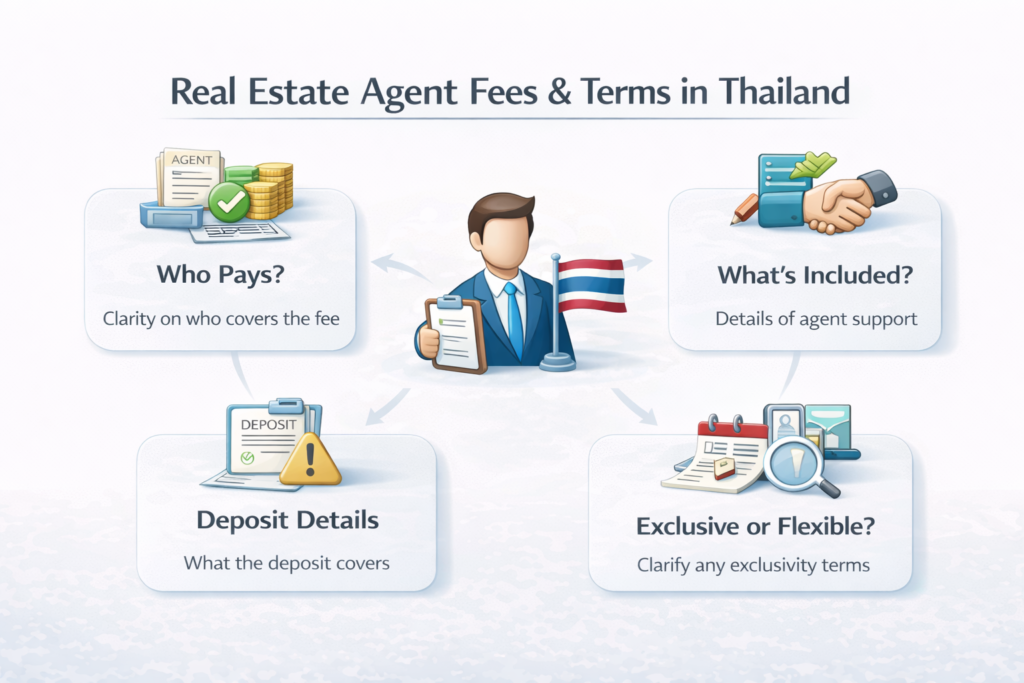
You should also understand whether any exclusivity is expected. If the agent wants you to work only with them for a period of time, that should be explained clearly before you agree.
The goal here is simple. You should know what you are paying for, what the process includes, and what happens next. Once these parts are clear, it becomes easier to judge whether the agent is truly professional.
Rental payment structure in Thailand
Renting property in Thailand often requires more upfront payment than some people expect. In many long-term rentals, the common structure is two months’ deposit plus one month’s rent in advance, which means tenants may need to prepare around three months of rent before move-in. Pattaya and Phuket rental guides still describe that as a normal setup, and Bangkok-focused legal guides also note that this remains common in practice.
At the same time, there is an important legal detail. For certain regulated residential rental businesses, Thai consumer-protection rules have limited advance rent and security deposit more tightly, often to around one month advance plus one month deposit. In practice, though, many listings and landlords still ask for the older three-month structure, so tenants should check carefully which setup applies to their case.
That is why it helps to ask about the full payment structure early. Once you know the expected deposit and advance rent, it becomes easier to judge whether the agent is explaining the process properly.
What a rental contract in Thailand should include?
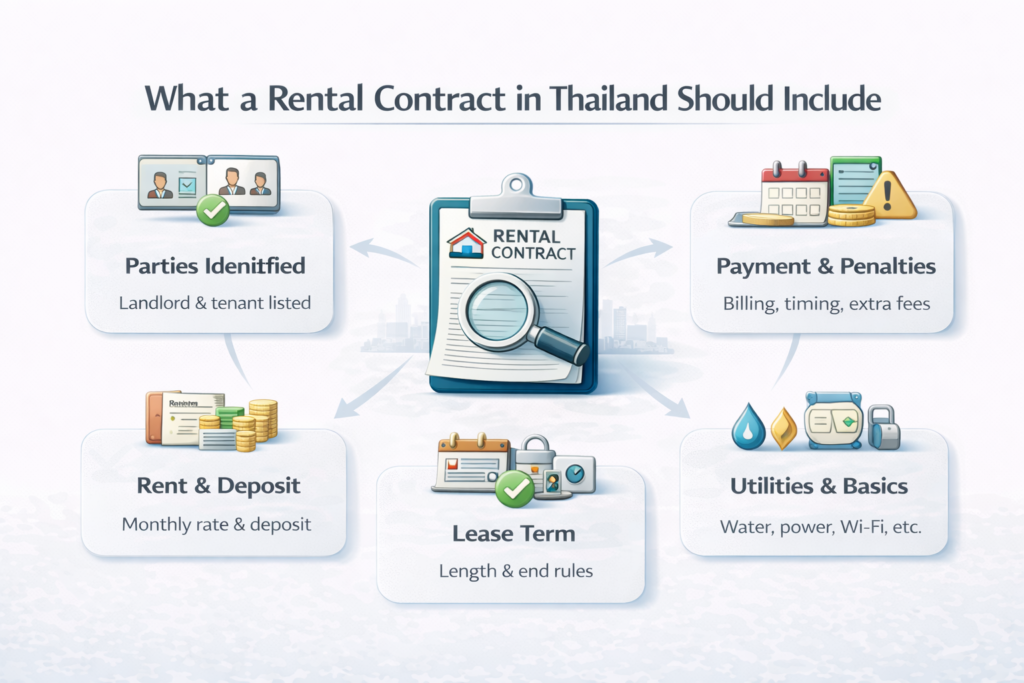
A rental contract in Thailand should be written clearly and should show the main details before any payment is made. A proper contract should identify the landlord and tenant, the property address, the monthly rent, the deposit amount, the lease term, and the rules for ending the agreement. It should also explain penalties, payment timing, and what happens if there is damage or early termination.
It also helps to check practical details that affect daily life. The contract or supporting discussion should make clear how utilities are billed, whether the internet is separate, what furniture or equipment is included, and when the deposit should be returned. In Thailand, these small details can create problems later if they are left vague.
That is why the contract should not be treated as a formality. It is one of the clearest ways to see whether the rental process is being handled properly before you commit.
How Go Condo Atlas helps you find verified real estate agents in Thailand
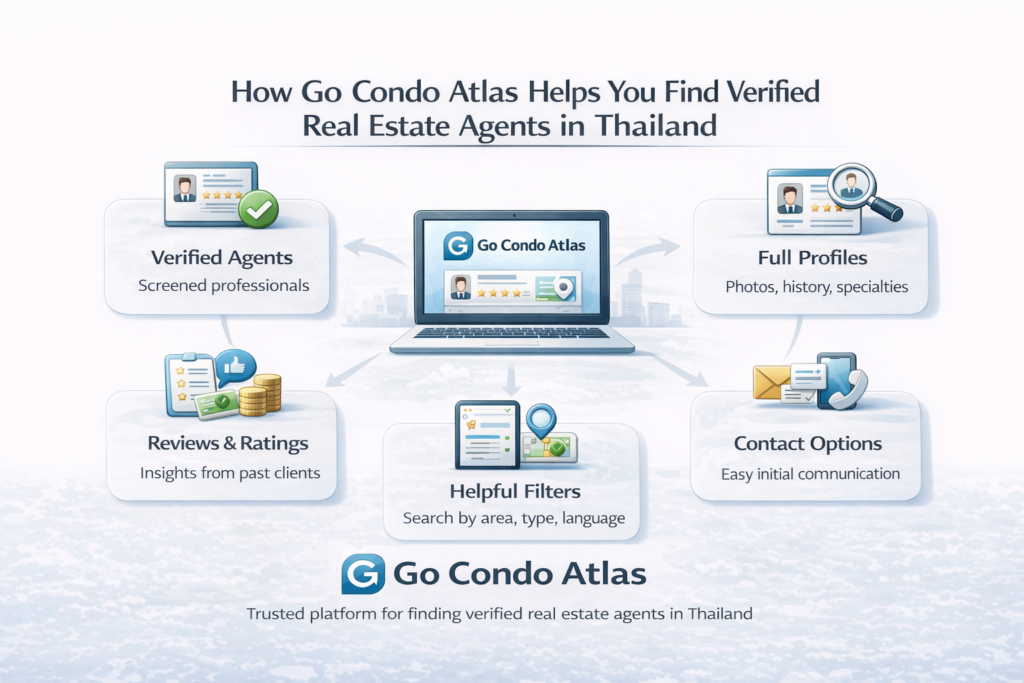
Go Condo Atlas helps make the search easier by giving people a more reliable starting point before they choose who to trust. Instead of relying only on random listings, scattered profiles, or agents with very little checkable information, users can explore a platform built to support better decisions.
This matters because choosing a real estate agent in Thailand often starts with uncertainty. You may see many listings online, yet still have very little clarity about who is behind them, how active the agent really is, or whether their market presence can be checked in a meaningful way. That is where Go Condo Atlas adds value.
The platform helps users review verified real estate agents in Thailand in a more structured way. It gives a clearer view of who operates in the market and makes it easier to compare agents before any contact, viewing, or negotiation begins. This can save time, reduce confusion, and help users approach the process with better questions from the start.
For buyers, renters, and investors, that extra clarity matters. A platform like Go Condo Atlas does not replace careful judgment, but it helps people begin from a stronger position. From there, the next step is to look at the most common questions people still have before choosing an agent in Thailand.
What to consider when renting in key Thailand locations?
Renting in Thailand can look very different depending on the city. An agent who fits Bangkok may not be the best fit for Phuket or Chiang Mai. That is why it helps to understand the local rental pattern, common tenant concerns, and the small details that often affect daily life after move-in.
Bangkok
Renting in Bangkok usually means balancing location, building quality, and daily transport. Many tenants choose areas near BTS or MRT lines because commuting can shape the whole living experience. It is also common for utilities, internet, and building-related costs to sit outside the base rent, so these should be checked early.
Guides for Bangkok renters also point out that deposits are often one or two months, and visa length can affect landlord comfort in some cases. A good agent in Bangkok should help you compare not only units, but also commute, building management, and the full monthly cost.
Chiang Mai
Renting in Chiang Mai often feels easier and calmer than Bangkok, but tenants still need to pay attention to local factors. Air quality is a recurring concern, especially during the burning season, and some renters also pay close attention to mold, ventilation, and room condition during viewings. Because lifestyle fit matters a lot here, a good agent should help you think beyond price alone and consider neighborhood rhythm, work setup, and property condition.
In Chiang Mai, the right rental choice is often the one that matches how you actually plan to live day to day, not simply the cheapest listing online.
Phuket
Renting in Phuket often requires more caution because the market includes condos, villas, tourist-heavy areas, and many remote transactions. This is where fake listings, weak verification, and pressure to transfer money early can become more serious concerns.
Phuket-focused property guides warn people to confirm ownership details, avoid paying before documents are checked, and be careful with listings that look too good for the price. Rental legality can also matter in some cases, especially around short-stay expectations. A good agent in Phuket should help you verify the unit, explain the rental setup clearly, and reduce the risk that comes with distance and urgency.
Pattaya
Renting in Pattaya often attracts long-stay foreigners, retirees, and tenants who want flexible lifestyle options near the coast. Even so, the basics still matter: lease length, deposit terms, receipts, and building management should all be clear before you commit.
Recent Pattaya rental guidance still points to six- or twelve-month contracts as common, with two months’ deposit and one month paid in advance often treated as the normal structure. A good agent in Pattaya should explain these terms clearly, help you assess the building itself, and make sure the process is simple before money changes hands.
Conclusion
Choosing a real estate agent in Thailand should never be based only on who replies first or who posts the most listings. The better choice usually comes from clear communication, local knowledge, honest answers, and a process that makes sense from the start. This matters even more when money, contracts, and property details need to be checked carefully before any decision is made.
A good agent should help you understand the market, explain the next steps, and reduce confusion during the search. A weak one can make the process harder, less clear, and more risky than it needs to be. That is why it helps to compare agents carefully, ask direct questions, and check how they handle important details before you move forward.
If you want a stronger starting point, Go Condo Atlas can help you explore verified real estate agents in Thailand and approach your search with more clarity from the beginning.
Frequently asked questions about choosing a real estate agent in Thailand
How do I choose a real estate agent in Thailand?
Choose a real estate agent in Thailand by looking at their communication style, local knowledge, transparency, and how clearly they explain the process. A good agent should make things easier to understand, not more confusing.
What are the red flags when choosing a real estate agent in Thailand?
Common red flags include vague answers, pressure to transfer money too early, outdated listings, weak explanation of fees, and little checkable professional presence online.
How much do I usually need to pay upfront when renting in Thailand?
In many cases, tenants should prepare for a deposit and advance rent before move-in. The exact structure can differ, so it is important to ask what is required before you commit.
What should a real estate agent in Thailand explain clearly?
A real estate agent in Thailand should explain fees, payment timing, contract terms, next steps, and any property details that matter before you agree to anything.
Is it better to compare more than one real estate agent in Thailand?
Yes. Comparing more than one agent can help you see who communicates better, who understands the area more deeply, and who gives clearer guidance.
Can Go Condo Atlas help me find verified real estate agents in Thailand?
Yes. Go Condo Atlas helps users review verified real estate agents in Thailand and gives a stronger starting point before contact, viewings, or negotiations begin.